Good hardwood maintenance comes down to four habits: keep grit off the floor, clean with a barely damp mop, hold indoor humidity in a steady range, and protect the surface from furniture and pets. Do those consistently and most floors stay in good shape for years. When the finish does wear down, a screen and recoat or a full refinish can bring it back, and knowing which one you need keeps you from choosing the wrong fix.
Sweep and dust before anything else
Grit does more damage than most people expect. Every step grinds sand, soil, and tiny stones into the finish, and a floor can look dull even when it looks clean. Dust or sweep high-traffic areas several times a week, especially the entry, the kitchen, and the route from the back door. A microfiber dust mop with a flat head picks up fine grit without pushing it around, and a soft-bristle broom works too.
Maryland winters add their own grit. Road salt and brine tracked in on boots leave a gritty, sometimes chalky residue, and it can dull the finish if it sits. Keep a mat at each entry and wipe boots before stepping onto the wood. In parts of central Maryland, red clay from yards and gardens is another common tracker. Let mud dry, then vacuum or scrape off the loose clay before you mop, because wet clay smears and can stain.
Mop with a damp pad, not a wet one
The finish is a thin protective film, and the wood beneath it is porous. Standing water is the real threat, because it slips into seams and board edges and leads to swelling, cupping, and dark stains. One careful mopping won't ruin a floor, but a soaked mop or a puddle left to dry slowly can.
Use a microfiber pad, wring it until it stops dripping, and work in small sections. Choose a pH-neutral cleaner labeled for hardwood and follow the dilution on the label. For light everyday cleaning, a barely damp pad with plain water is fine. If a wet patch still looks shiny after a few minutes, you used too much water or moved too slowly, so dry it with a towel. Most hardwood care guides also say to skip steam mops, which push heat and moisture into the seams. A list of products to keep out of the bucket is in what not to use on hardwood floors.
Keep the air in a range wood can live with
Wood is always trading moisture with the air around it. In humid air, boards swell and seams close. In dry air, they shrink and seams open. Most flooring makers' care guides point to roughly 35 to 55 percent relative humidity indoors, and that's the range to aim for all year.
A basic digital hygrometer shows what your house is actually doing. Set it in the main living room, away from the furnace and exterior doors, and check it each morning for a week to see the pattern. Maryland's climate pushes in both directions. Heated winter air can drop well below the target, which is when gaps open, and humid summers can push the air above it, which is when boards swell. A whole-house humidifier tied to the furnace gives the most even winter result, and a portable unit can handle a single room. In summer, the air conditioner and, when needed, a dehumidifier keep the top end in check. For the reasons behind winter gaps in particular, see why hardwood floors gap in Maryland winters.
Protect the surface: pads, rugs, and nails
Most scratches come from three things: furniture that gets dragged, pet nails, and grit trapped under something heavy. Put felt glides or rated pads under every chair and table leg, and replace them when they flatten or pick up grit. Trim pet nails every few weeks, and watch for dogs that skid on turns, since that leaves long marks in the same spot.
Area rugs help in busy lanes, but choose a breathable or non-staining pad. Rubber backings can leave marks on some finishes, and a rug that never moves can trap grit against the boards. Lift rugs now and then to check the floor beneath.
Direct sun fades hardwood over time, and a rug or a piece of furniture leaves a paler shape wherever it shielded the wood. Use curtains or blinds during the brightest hours, and move rugs and furniture now and then so the color ages evenly. When it's time to recoat, ask whether a UV-inhibiting finish suits your floor. Rotating rugs to prevent sun fading covers the rug side of the problem.
Check the finish every few months
The finish wears in predictable places: the path between the front door and the kitchen, the spot in front of the sink, and where chairs get pulled out. Once a season, walk the floor with a flashlight held low, which shows dull areas and fine scratches that vanish under overhead light. Then put a few drops of water on worn spots and a few hidden ones. Water that beads and stays round means the finish is holding. Water that soaks in and darkens the wood means that spot is open.
| Task | How often | Why it matters |
|---|---|---|
| Dust or sweep | Several times a week in busy areas | Stops grit from grinding into the finish |
| Damp mop | Every week or two, or when a spot looks sticky | Lifts dirt and oils without soaking the wood |
| Check humidity | Glance at the hygrometer weekly | Catches drift before gaps or cupping form |
| Trim pet nails | Every few weeks | Prevents new scratches |
| Check the finish | Every few months | Finds wear while the spots are still small |
Choose the right service for a worn finish
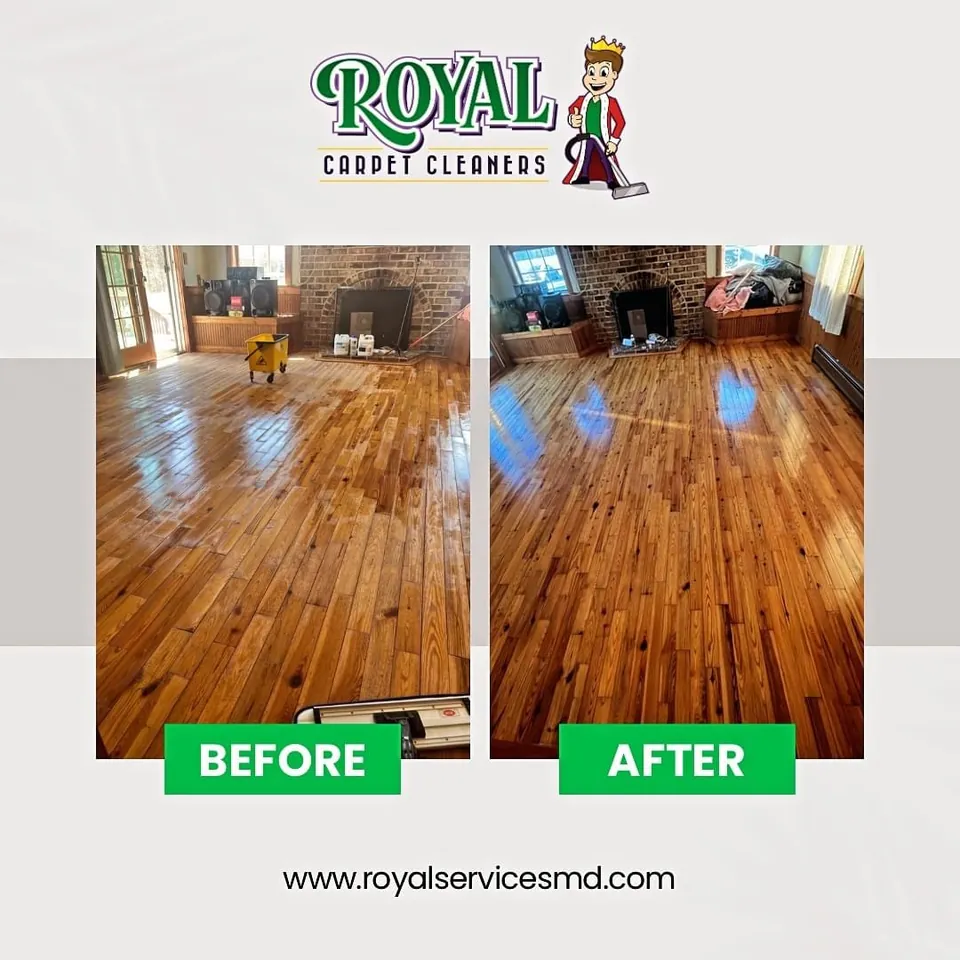
When the finish is dull or scuffed but the wood is still sound, a sandless screen and recoat is usually the right step. It abrades the existing finish so the new coat can bond, and it creates much less dust than sanding. When the finish is gone in the traffic lanes, the wood looks gray or stained, or deep scratches reach the wood, refinishing is the right call. It removes the old finish and a thin layer of wood to get back to clean, even wood. Wax buildup changes the plan, because wax has to come off before any new coat will bond. Screen and recoat vs. full refinishing walks through the decision in more detail.
When it's time to call a pro
Daily care and a seasonal check handle most floors, but a pro is worth calling when you see cupping, gaps that won't close, dark stains, peeling finish, or wax buildup you can't clear. Royal Carpet Cleaners is a family-owned, IICRC Certified Firm that offers hardwood floor cleaning, clean and buff, wax removal, sandless screen and recoat, and dustless refinishing. Hardwood needs an in-person look before an exact quote, but quotes are given upfront. You can book online or call (410) 569-2877, and the hardwood floor cleaning page lists the details.
Frequently asked questions
How often should I mop hardwood floors?
In an average household, a damp mop every week or two is usually enough, and sooner if a spot looks sticky or dull. Sweep or dust the busy areas more often, since grit is what wears the finish.
Can I vacuum hardwood floors?
Yes, as long as the vacuum has a hard-floor setting or a head without a beater bar. Beater bars can scratch the finish and fling grit across the boards.
Do I need to wax my hardwood floor?
Usually not. Most modern finishes don't need wax, and wax can build up and make the floor look hazy. An oil-finished floor needs a maintenance coat made for that finish instead.

Written by
The Royal Carpet Cleaners Team
Royal Carpet Cleaners is a family-owned, IICRC-certified company based in Bel Air, Maryland. Our technicians clean carpet, rugs, upholstery, tile, and hardwood across Harford, Baltimore, Howard, and Cecil counties.