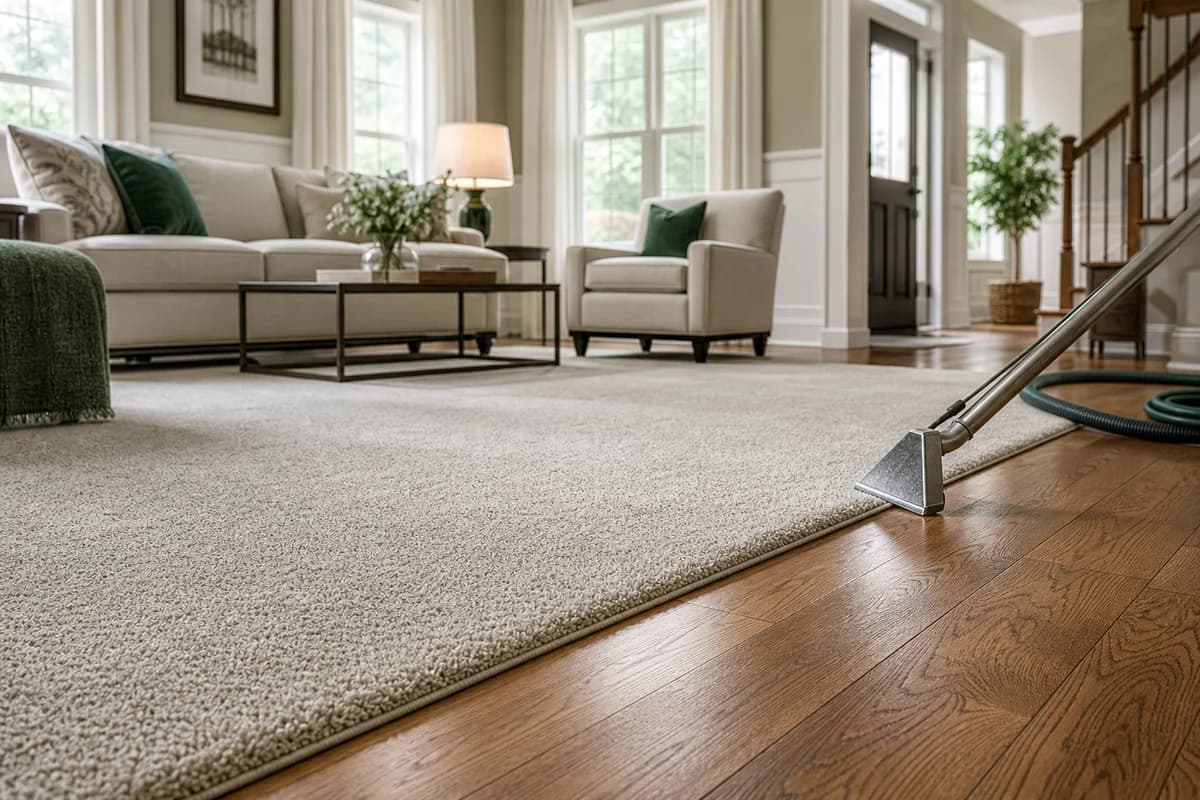
Wool is tougher than most people expect, but it has a few weak spots that matter. It's a protein fiber, so alkaline soap, hot water, and rough scrubbing can all cause damage. The safe routine is to vacuum both sides regularly, blot spills right away with cool water and a pH-neutral cleaner, and leave anything deep or uncertain to a professional who tests the fiber and dye first.
Why wool reacts differently
Wool is keratin, the same protein as hair. Each fiber is covered in tiny overlapping scales, and when heat, moisture, and agitation come together, those scales lock into one another. That's felting: the rug shrinks, thickens, and mats, and you usually can't undo it.
Alkaline products are the other problem. Ammonia, many all-purpose cleaners, and strong detergents raise the pH enough to swell wool fibers and weaken them, and they push the fiber toward yellowing. Wool also holds a lot of water, so a rug that feels dry on top can stay damp at the base for a long time. That damp base is where odor and mildew start.
Vacuum both sides, with the right settings
Grit is the quiet enemy of wool. Sand and dirt work down into the pile and act like sandpaper with every step, so regular vacuuming does more for a wool rug than an occasional deep clean. In a hallway or living room, once a week is a good baseline. In a bedroom, every couple of weeks usually does the job.
Use suction only. Take the beater bar off or switch to a bare-floor or upholstery tool, because a rotating brush can fray the surface and pull loops. Work in slow, overlapping passes, first with the pile and then across it, since the second direction lifts grit the first one missed.
Then flip the rug and vacuum the back. Grit that works into the foundation eventually reaches the fibers from below, and it's easy to miss if you only do the top. Regular vacuuming also removes the food residue that draws moth larvae to wool, which is covered in moth damage in wool rugs.
Spot-clean fast: blot, don't scrub
Speed matters more than strength. A fresh spill lifts easily, and blotting does most of the work.
Before you touch a visible stain, check a hidden spot. Dampen a white cotton cloth with the solution you plan to use, press it into the back corner for a full minute, and look for color on the cloth. If color comes off, the dye isn't fixed, and the rug shouldn't get any wet treatment at home. The full test and what it means are covered in why rug colors bleed.
Then, for a visible spill:
- Lift the liquid with a dry white cloth or paper towel, pressing straight down. Don't rub.
- Mix a few drops of clear, dye-free dish soap into a cup of cool water. A pH-neutral wool wash is the safer choice if you have one. Keep the solution weak.
- Dab the spot from the outer edge toward the center, switching to a clean section of cloth every few dabs.
- Rinse by blotting with a cloth dampened in plain cool water. Leftover soap attracts soil and can leave a stiff, dingy patch that looks worse than the stain did.
- Blot dry with a towel, then let the area air-dry flat.
Here's how the common stains break down:
| Stain | First step | Keep in mind |
|---|---|---|
| Wine, coffee, juice | Blot, then a pH-neutral cleaner in cool water | Test a hidden spot first, and don't let it dry |
| Urine, blood, egg, dairy | Cool water and an enzyme cleaner, used as the label directs | Heat sets these stains, so keep everything cool |
| Cooking oil, grease | Blot, cover with dry cornstarch, leave it, then vacuum | Water won't lift oil, so skip the wet cloth until the powder has worked |
Protein stains are where a hot-water reflex does the most damage. Urine, blood, egg, and dairy all set with heat, so reaching for hot water is exactly backward. If the stain is pet urine, it may have soaked into the base, so read pet urine on wool area rugs before you start.
What to keep away from wool
- Ammonia, or any cleaner that lists it. It's alkaline and damages wool fibers.
- Chlorine bleach, which strips color and weakens the fiber.
- Oxygen bleach or hydrogen peroxide. Even diluted, both can lighten or shift dyes and weaken wool.
- Heavy-duty all-purpose or oven cleaners. They're built to cut grease at high pH, which is exactly what wool doesn't need.
- Hot water on protein stains, and heat or steam on any wet wool.
- Stiff brushes or scrubbing pads, which tangle the yarn and raise the risk of felting.
Never mix cleaners to make a stronger one. Bleach combined with ammonia or with an acid such as vinegar releases fumes that can seriously hurt you.
Drying a wool rug without felting it
Press out as much water as you can with dry towels, pressing firmly rather than rubbing. Lay the rug flat on a clean, dry surface, and run a fan on low across it to move air. Keep it out of direct sun and away from heat sources. Forced-air vents and radiators are a trap in Maryland's dry, heated winters: they dry the top quickly while the base stays wet.
Plan on a day, not an hour, for a thick wool rug to dry all the way through. Lift a corner now and then to check the underside. If it's still cool or damp to the touch, keep the air moving. And never put wool in a clothes dryer.
Where a professional fits in
Spot care handles fresh, contained spills. It can't reach the base of a rug, and it won't fix a room's worth of traffic dirt. For that, a pro should start with an inspection. Royal Carpet Cleaners begins every rug job with a fiber and dye inspection and a detailed dry vacuum before any water goes on. Then the rug is pre-treated, cleaned on-site with hot water extraction, deodorized, and offered an optional fiber protector. Hot water extraction is a reasonable method for wool when the technician uses pH-appropriate products and controls the temperature. It's fair to ask any cleaner how they test colorfastness before they start.
If your wool rug is valuable, heavily soiled, or you can't identify the fiber, that's a good time to book a visit through our area rug cleaning page. You can also book online.
Frequently asked questions
Can I put a wool rug in the washing machine?
Almost never. Agitation, a lot of water, and heat from a dryer can felt the fibers, distort the rug, and stretch the backing. Unless the maker says it's machine-washable, treat it as hand-clean only.
Why did my wool rug turn yellow after cleaning?
A common cause is alkaline residue, either from a cleaner that was too strong or from soap that wasn't rinsed out. Sun and age can also yellow wool, and cleaning can't reverse that, so a pro can help you tell which one you're dealing with.
Is a steam cleaner safe for a wool rug?
Not a consumer steamer. Those push hot water and heat into one small spot and rarely pull much of it back out, which can shrink wool, set stains, and leave a stiff patch. A trained technician's extraction is a different process, and it still starts with testing.

Written by
The Royal Carpet Cleaners Team
Royal Carpet Cleaners is a family-owned, IICRC-certified company based in Bel Air, Maryland. Our technicians clean carpet, rugs, upholstery, tile, and hardwood across Harford, Baltimore, Howard, and Cecil counties.