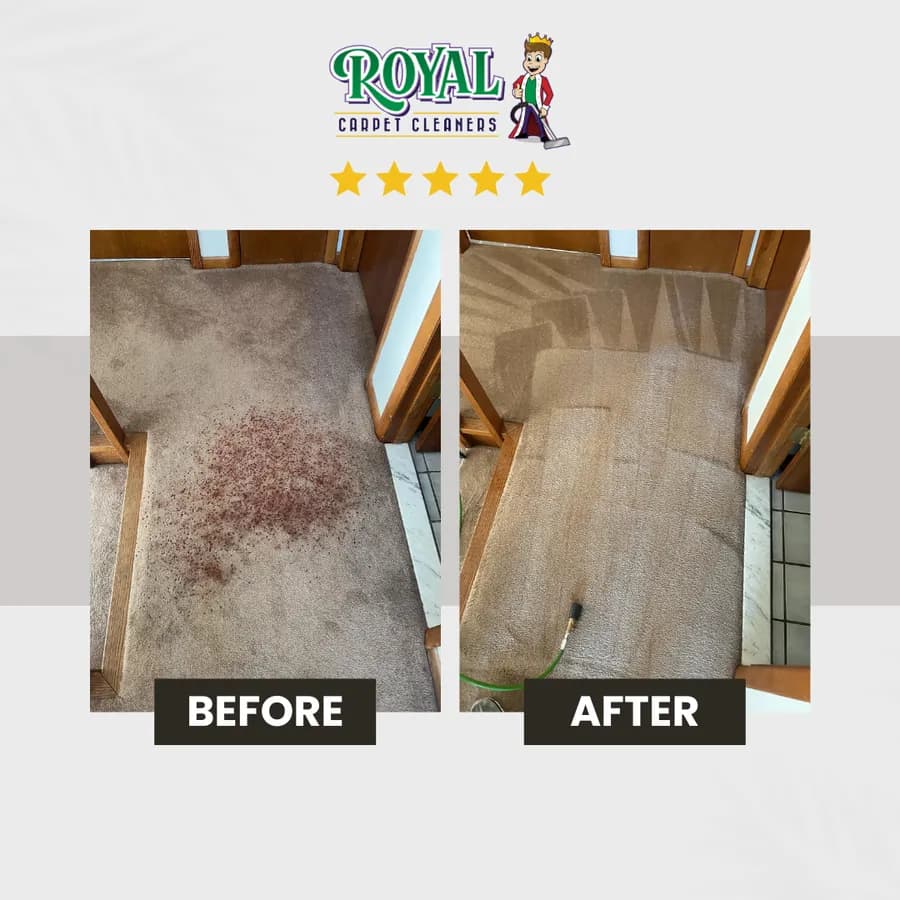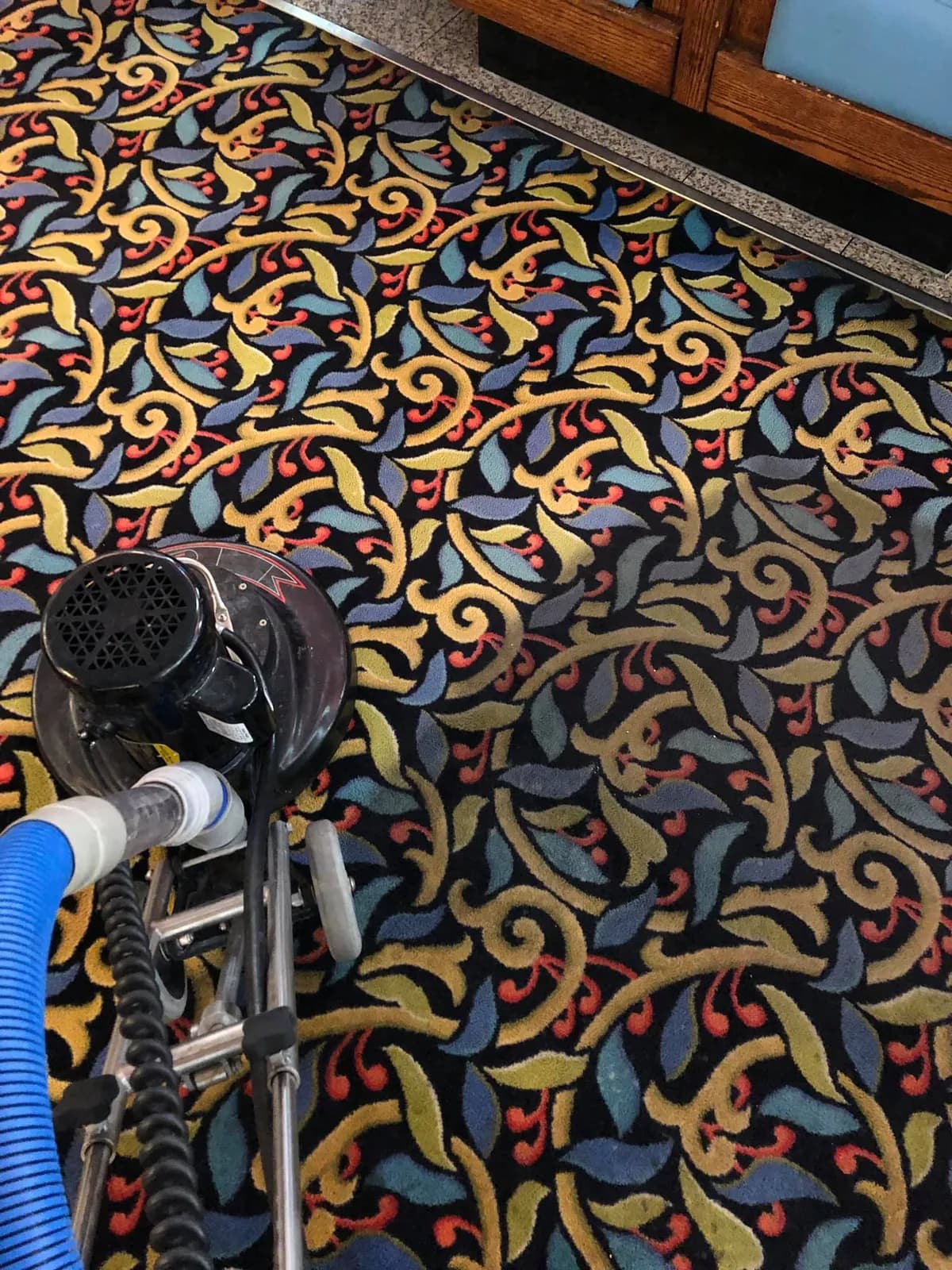
A spot that comes back after cleaning is almost always wicking. As the carpet dries, moisture carries residue from the pad and backing up to the surface, and the stain reappears where the water evaporates. It doesn't mean the carpet was damaged, and it doesn't mean the stain came from nowhere. The fix is to control how much liquid goes into the carpet, then pull out what's left behind.
What wicking actually is
A carpet is a layered system: the face fiber, the backings that hold the tufts in place, and a pad underneath. Liquid that gets past the fiber can settle into the pad. Stains and cleaning solutions both carry dissolved material, such as sugars, dyes, soap, and minerals, and that material stays behind when the water leaves.
Evaporation drives the process. Water leaving the carpet surface pulls moisture up from below, the same way a paper towel draws liquid up from a spill. That moisture carries dissolved residue with it. When it reaches the top, the water evaporates and the residue is left in the fibers near the surface. The result is a ring or patch that looks like a new stain, even though it came from underneath.
Why it happens
Wicking needs two things: residue sitting in the pad, and enough moisture to move it. Most of the time, the trigger is more liquid than the carpet can release quickly.
| Cause | Why it leads to wicking |
|---|---|
| Too much cleaning solution | More liquid means more dissolved material left in the pad |
| Weak extraction | Water and residue stay in the pad instead of being pulled out |
| Slow drying | The pad stays wet longer, giving residue more time to migrate |
| Leftover soap or detergent | Soap residue holds moisture and attracts soil |
| A stain that soaked deep | A spill reached the pad before anyone treated it |
Household cleaning is the most common culprit. Pouring a cup of solution on a stain, or scrubbing with a sudsy sponge, puts far more liquid into the carpet than the spot needed.
How to prevent it at home
Wicking is a volume problem, so the goal is to use less water and get more of it back out.
- Blot, don't soak. Press a dry white towel on the spill to absorb as much as you can before you treat it.
- Put the solution on the towel, not the carpet. Dampen the towel lightly and blot the stain. This keeps you in control of the moisture.
- Keep blotting until the towel stops picking up color or moisture. That's your signal the spot is clean enough to leave alone.
- Get the air moving. Run a fan across the area, and use a dehumidifier if the room is damp.
- Keep the pad dry. Don't let a treated spot sit wet for hours, since the pad is where residue collects.
Professional extraction works on the same principle. The machine applies a measured amount of solution, agitates the fiber, and pulls the water and dissolved soil back out with strong suction. Thorough extraction is what keeps residue from migrating later.
How to treat a spot that comes back
If a spot returns, the residue is still there, and adding more solution won't solve it. Work through these steps with a stack of dry white towels close by.
- Test first. Dab a hidden spot, such as the inside of a closet, with your solution, wait for it to dry, and check for color change or fiber damage.
- Blot the returning spot with a dry white towel, pressing firmly. This draws up the moisture and residue that are rising.
- Mix about ¼ teaspoon of clear dish soap into a cup of lukewarm water. Dampen a clean white towel with this solution and blot the spot, working from the outside edges toward the center.
- Rinse out the soap. Dampen a fresh white towel with plain lukewarm water and blot the same area. Any soap left behind is the next thing to wick up.
- Dry it under light weight. Place a dry white towel over the spot, add something heavy and flat on top, and replace the towel whenever it feels damp. Run a fan across the area until it's dry.
- Check the spot the next day. If it's still there, repeat the process once. If it returns after two careful rounds, stop and get help.
Use lukewarm water for every step. Hot water can set protein stains from blood, urine, egg, and dairy, and heat can also push residue to the surface faster.
What not to do
- Don't pour solution on the spot or let it soak. More liquid means more wicking.
- Don't scrub hard. Friction frays the fiber and pushes the stain deeper into the pad.
- Don't use colored towels or newspaper. Dyes and printing ink can transfer onto the carpet.
- Don't use bleach, and never mix it with ammonia, vinegar, or any other acid.
- Don't use hydrogen peroxide or oxygen bleach on wool, silk, or dyed fabrics without testing first. On wool, these can damage the fiber.
When the problem is the pad
Sometimes the trouble isn't in the carpet at all. A pad that stays damp can develop odor and mildew, and a stained pad can keep feeding residue up through the face fiber. Surface treatments can't reach it. Replacing a pad is a job for a flooring installer. Royal Carpet Cleaners doesn't do carpet repair or stretching, so that work belongs with a flooring pro.
If the wetness came from a flood, a leak, or a sewage backup, that's a water damage problem, and Royal doesn't handle water damage restoration. Call a restoration company first, then have the carpet cleaned once it has fully dried.
When to call a pro
If a spot keeps returning after two careful rounds at home, or the stain covers a large area, professional extraction is the more reliable fix. A technician can pre-treat the spot, measure how much residue is in the pad, and rinse with enough water to pull the residue out rather than leaving it in the fiber. Our carpet cleaning service is built around that process. Before you book, spot-cleaning mistakes that make stains worse is a useful read, and why carpet gets dirty faster after cleaning explains the soap side of the same problem.
Frequently asked questions
Can I add more cleaner to a spot that came back?
Usually not. Extra cleaner adds more residue to the same pad, and that residue is what wicks up next. Rinse with plain water and blot first, and use a small, measured amount of cleaner only if you still need it.
Does a returning spot mean the carpet is ruined?
Almost never. Wicking is a residue problem, not fiber damage. Once the residue is removed, the carpet can usually be returned to its normal look.
How soon after cleaning should I watch for wicking?
Most wicking shows up while the carpet dries or within a day or two. A spot that reappears weeks later usually points to residue that never came out of the pad, or to a stain that was only partly removed.

Written by
The Royal Carpet Cleaners Team
Royal Carpet Cleaners is a family-owned, IICRC-certified company based in Bel Air, Maryland. Our technicians clean carpet, rugs, upholstery, tile, and hardwood across Harford, Baltimore, Howard, and Cecil counties.