Hot water extraction is the most thorough of the common carpet cleaning methods. Encapsulation, bonnet cleaning, and dry compound each have a place, but they work in different ways and leave different results. The right choice depends on how soiled the carpet is, how quickly it needs to dry, and what your warranty allows. For a deep clean, extraction usually wins, while a lower-moisture method can be the smarter pick for light maintenance.
How hot water extraction works
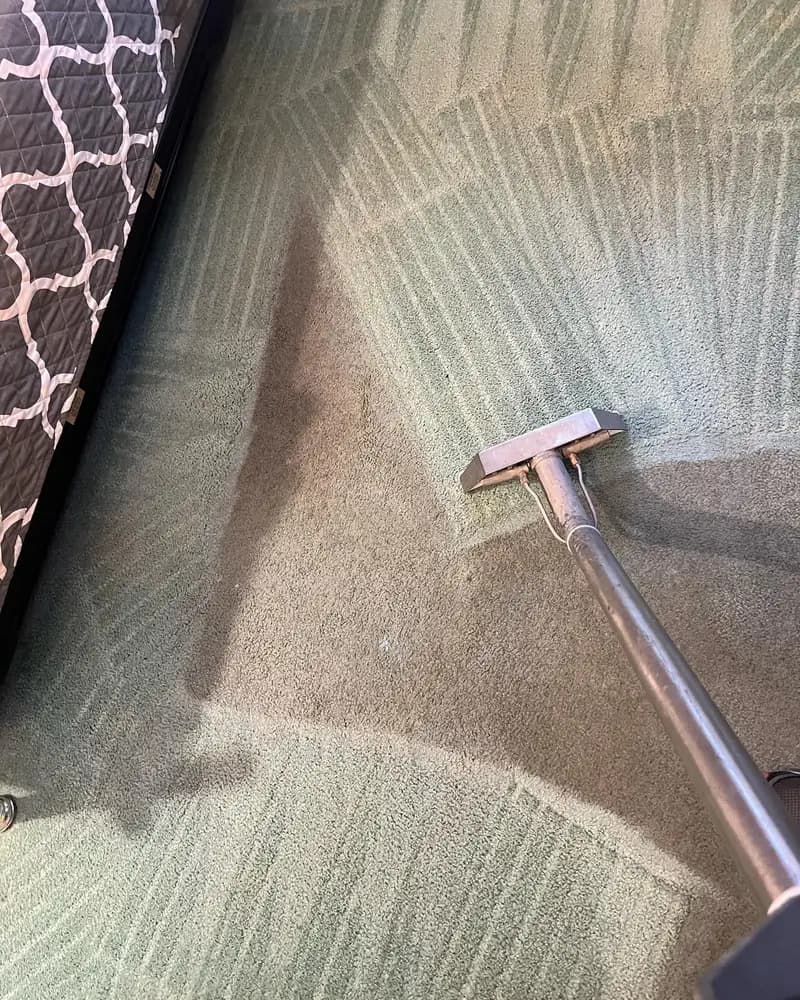
Hot water extraction is often called steam cleaning, but it doesn't use steam. The process begins with a thorough pre-vacuum, followed by pre-treating spots and traffic lanes. The fiber is agitated so that soil loosens its grip. Then a machine injects hot water and cleaning solution deep into the carpet, and a strong vacuum pulls the water, dissolved soil, and loosened particles back out.
Heat helps. Warmer water dissolves many soils more readily than cold water, especially oily ones, and it lets the cleaning solution do its job faster. Because the water travels through the full depth of the pile and reaches the backing, the method removes soil that never touches the surface. When the rinse is done properly, the carpet is left with less residue behind.
Royal Carpet Cleaners follows this sequence with truck-mounted equipment, finishing with a deodorizer and a post groom to lift the pile. Equipment matters less than technique, as the truck-mounted vs. portable comparison explains.
Because extraction puts water into the carpet, expect some drying time. A carpet typically dries in 4 to 8 hours, depending on fiber, humidity, and airflow.
Encapsulation: low moisture and fast drying
Encapsulation uses a solution containing polymers that surround soil particles. As the carpet dries, those polymers form small crystals that trap the soil, and the crystals are then vacuumed away. Because so little water goes in, the carpet is usually dry much sooner than after extraction.
The trade-off is that encapsulation works best on lightly to moderately soiled carpet, and it depends on careful vacuuming afterward. If crystals are left in the pile, the carpet can feel stiff, look dull, and attract new soil. Encapsulation is often a good fit for a busy commercial space that needs to be walkable the same day, but it is rarely the first choice for a carpet with years of built-up soil.
Bonnet and dry compound: surface maintenance
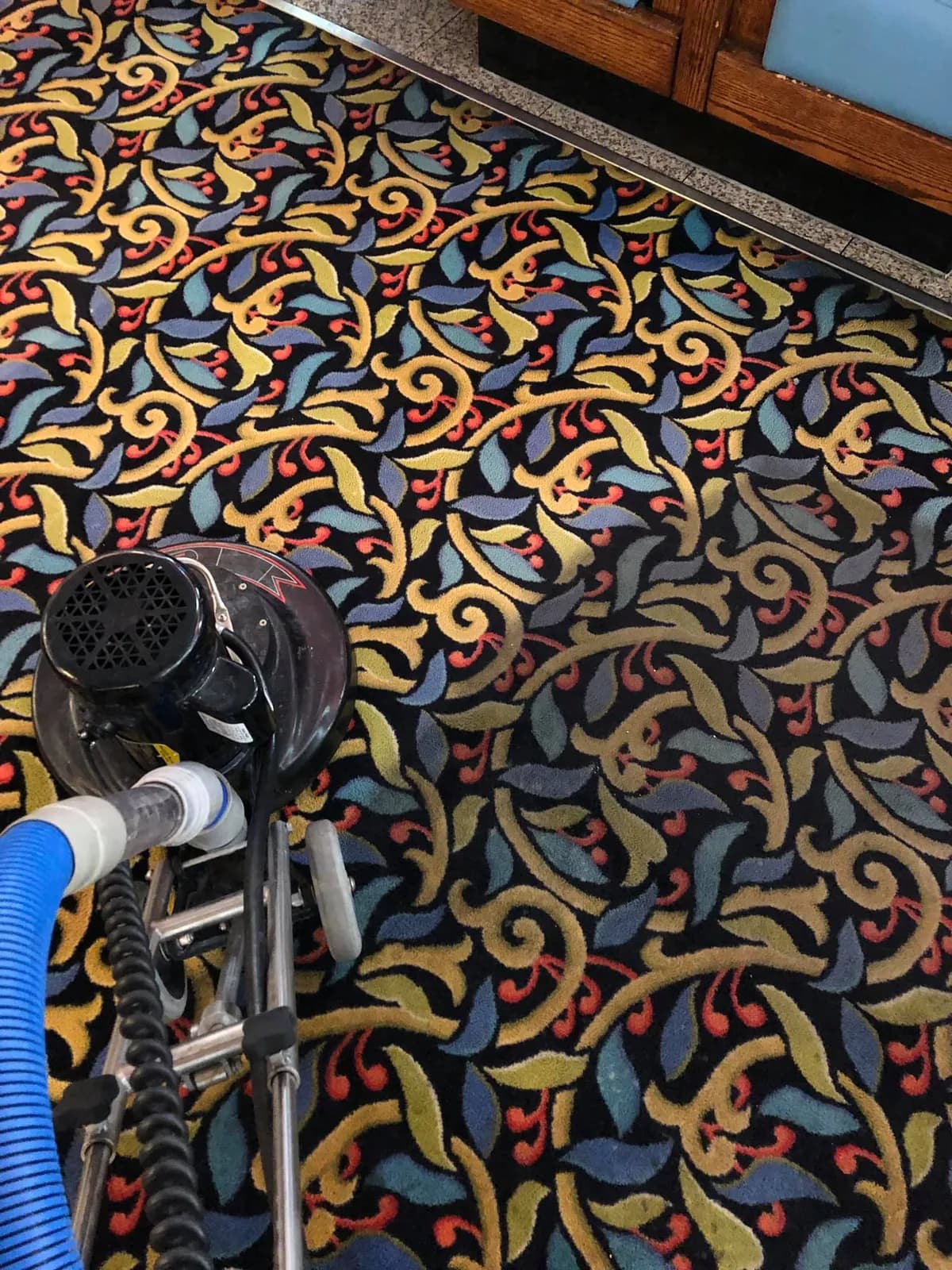
Bonnet cleaning uses a floor machine that spins a pad dampened with cleaning solution. The pad picks up surface soil and is then replaced when it's dirty. It's quick and common in commercial corridors and other high-traffic spaces for routine upkeep. The limit is depth: a bonnet reaches surface soil, not the soil lodged at the base of the pile. Aggressive pad work can also roughen some fibers over time.
Dry compound cleaning sprinkles an absorbent powder over the carpet, works it in with a brush, and vacuums it up. It uses very little moisture and is fast, but it removes the least soil of these methods. Compound left behind in the pile can attract dirt, so thorough vacuuming is essential.
How the methods compare
| Method | How it works | Moisture | Drying time | Deep soil removal | Main drawback |
|---|---|---|---|---|---|
| Hot water extraction | Hot solution injected, then vacuumed out | High | 4 to 8 hours | Strongest | Carpet stays damp for hours |
| Encapsulation | Polymers crystallize around soil, then get vacuumed | Low | Much faster | Moderate | Crystals must be fully removed |
| Bonnet | Spinning pad absorbs surface soil | Low | Fast | Surface only | Can roughen fiber over time |
| Dry compound | Absorbent powder worked in, then vacuumed | Very low | Fast | Light | Least soil removed, residue risk |
Residue deserves as much attention as the initial result, because it's what makes carpet re-soil quickly. Every method uses something that can stay behind. Hot water extraction with a thorough rinse leaves the least, because the final extraction pass pulls the rinse water out along with the soil. Encapsulation leaves polymer crystals if they aren't vacuumed away, bonnet cleaning leaves behind whatever the pad didn't capture, and dry compound leaves powder if it isn't fully vacuumed. A carpet that looks clean on the day of service but gets dark lanes within a few weeks often has residue in it.
Why many manufacturers name hot water extraction
Many carpet manufacturers name hot water extraction as the accepted cleaning method in their care guidelines, and some warranties name it directly. The reasoning is practical. Extraction can rinse soil and residue from the full depth of the carpet, while a method that leaves a film on the fiber or the backing can cause the carpet to re-soil faster.
Keep your cleaning receipts. Some warranties ask for proof that the carpet was professionally cleaned, and the invoice should show the method used.
Choosing a method for your carpet
- Heavy soil, pet accidents, or a first deep clean: hot water extraction.
- Routine upkeep in a busy home or office where drying speed matters: encapsulation, followed by thorough vacuuming.
- Surface refresh between deep cleans in a commercial corridor: bonnet cleaning.
- Quick touch-up when the carpet can't stay damp: dry compound.
- Wool or other natural fibers: any method can work, but tell the technician first and test a hidden spot, since heat and agitation can affect them.
Whatever method you choose, test a hidden spot first. Avoid hydrogen peroxide and oxygen bleach on wool, silk, and dyed fabrics unless you have tested them.
When a deep clean makes sense
If the carpet has built-up soil, a dull traffic lane, or a lingering pet odor, hot water extraction is usually the most reliable option, because it reaches the soil the other methods leave in the pile. Ask the company what method they recommend for your carpet's age and fiber, and why. A good answer will explain the reasoning rather than just naming a machine.
If you want a clear picture of the process before you book, what happens during a professional carpet cleaning visit walks through the steps. You can also see our carpet cleaning service for the details of how extraction is handled.
Frequently asked questions
Will hot water extraction damage my carpet?
Well-made carpet handles hot water extraction well. Wool and some delicate fibers need lower heat and gentler agitation, so tell the technician what the carpet is made of and test a hidden spot before the work starts.
Does encapsulated carpet feel different afterward?
It can, if the dried crystals were not fully vacuumed away. Leftover crystals can make the pile feel stiff and look dull, so make sure the cleaner vacuums thoroughly after the carpet dries.
Can I rent a machine and do hot water extraction myself?
You can, but the result depends on how much solution you use and how well you rinse and extract. Too much detergent leaves residue that attracts soil, and rental units often leave more water in the carpet than a professional unit does.

Written by
The Royal Carpet Cleaners Team
Royal Carpet Cleaners is a family-owned, IICRC-certified company based in Bel Air, Maryland. Our technicians clean carpet, rugs, upholstery, tile, and hardwood across Harford, Baltimore, Howard, and Cecil counties.