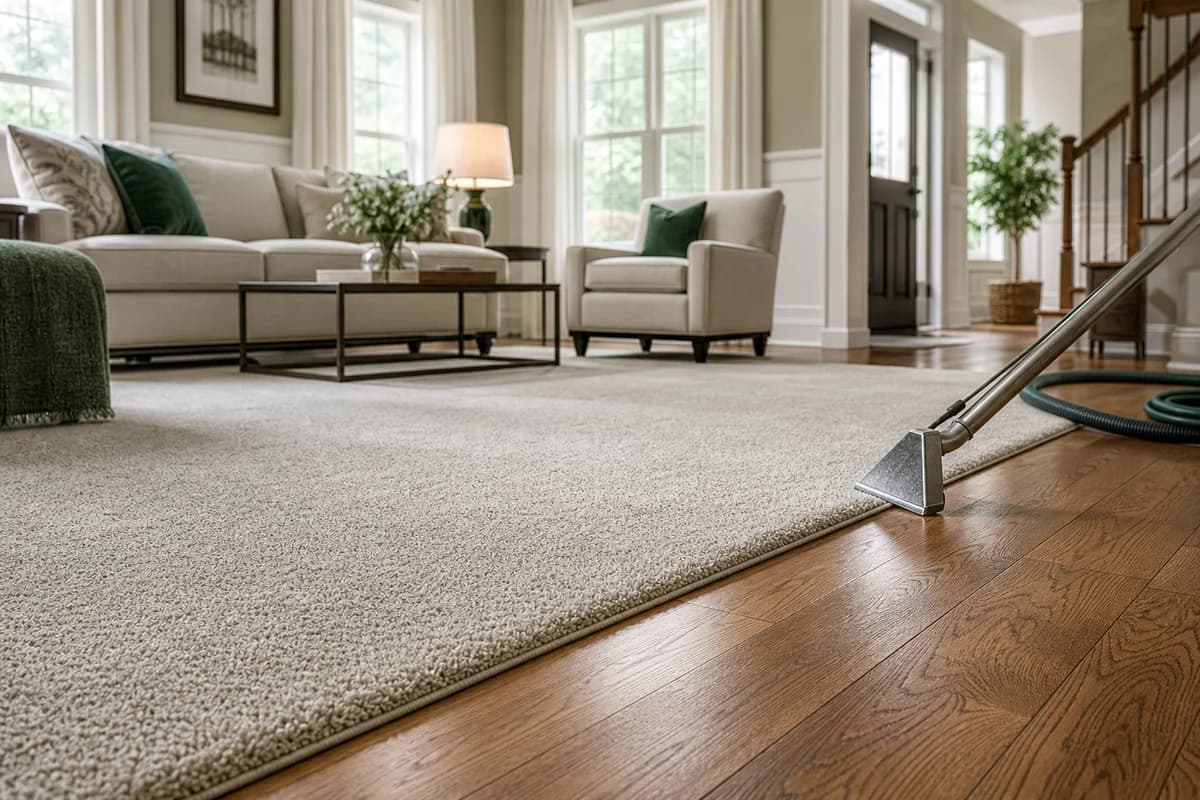
Most carpets dry in 4 to 8 hours after a professional cleaning. That's long enough to be an inconvenience and short enough to plan around. The exact time depends on the fiber, how much water went into the carpet, the humidity in the room, and how much air is moving across the surface. You can shorten the wait with simple steps, and you can avoid the mistakes that stretch it into days.
What counts as dry
Dry means the surface feels dry and the pile doesn't feel cool or spongy when you press your palm into it. Moisture lingers longest at the base of the pile, so check there too. A quick test works well: press a clean white towel firmly on several spots, including carpet near the baseboards. If the towel comes up clean, the carpet is dry enough to walk on lightly. If the towel comes up damp, it needs more time and more air.
What sets the drying time
| Factor | Effect on drying |
|---|---|
| Fiber | Wool holds the most water and dries slowest. Nylon holds a little. Olefin and polyester shed water quickly. |
| Pile density | Thick, dense pile holds more water in the fiber mass |
| Pad type | Dense rebond and foam pads can hold a lot of water, and a waterlogged pad adds the most time |
| Backing | Jute backings absorb and hold moisture, while synthetic backings dry faster |
| Humidity | High humidity slows evaporation, which is why humid summers stretch the wait |
| Airflow | Moving air carries moisture away from the surface |
| Amount of water | Too much solution or weak extraction adds hours |
The amount of water is the factor you can't see but can control. Thorough extraction, which pulls as much water out as possible, is one of the most useful things a cleaner can do for drying time, and it's why a careful rinse matters.
Evaporation happens only at the surface, so the drying rate depends on how fast water can travel up through the pile and how much moisture the air above it can still take on. Air that's already close to saturated, which is common on a humid day, accepts very little more. That's the whole reason humidity slows everything down, and it's also why a cool, dry day can dry a carpet faster than a warm, muggy one.
Speeding up the drying
- Run fans across the carpet. Angle them so the air sweeps over the surface at a low angle rather than blowing straight down. Use two fans in a large room, and keep doors open so air can circulate.
- Run a dehumidifier. In Maryland's humid months, a dehumidifier often matters more than anything else, because it pulls moisture out of the room air and lets the carpet release water faster. Empty the tank regularly.
- Use the air conditioning. Cooling dehumidifies as it runs, which helps during humid weather.
- Open windows only when outdoor air is drier. On a muggy July afternoon, an open window can add moisture rather than remove it. Compare the humidity inside and outside before you open anything.
- Keep the room warm, not hot. Gentle warmth helps evaporation. Keep space heaters well away from wet carpet.
Season by season
- Summer: Lean on the dehumidifier and the air conditioning, and keep windows closed on humid days.
- Spring: Keep windows closed while the carpet dries. Pollen drifting in can settle onto damp fiber and stick there.
- Fall and winter: Heated indoor air is usually dry enough to help. Keep the fans running, and check that a dehumidifier hasn't filled up and shut off.
Protecting the carpet while it dries
Royal Carpet Cleaners' technicians move standard furniture and leave booties for walking on damp carpet. The rest of the protection is up to you:
- Use furniture tabs. Small tabs or pieces of foil under furniture legs keep wood or metal from leaving color or rust marks on damp fiber.
- Keep rugs off damp carpet. A rug laid over wet fiber traps moisture, which can lead to odor and wicking.
- Limit foot traffic. Stay on the lanes you've been told are dry, and wear the booties if they were provided.
- Keep pets off. Damp fibers pick up tracks and fresh soil quickly.
- Stay off the stairs until they're dry. Damp stairs are slippery, and the carpeted stairs guide covers safe handling while they dry.
When it's taking too long
Most slow drying comes from one of three causes: too much water, too little airflow, or a pad that's holding moisture. If the carpet still feels damp after a full day of fans and a dehumidifier, check the edges and the area near the baseboards, where moisture hides. A musty smell, a soft spot underfoot, or a dark ring that keeps spreading suggests water is still in the pad.
A slow-drying carpet has a second risk. Moisture that lingers gives residue time to rise, so a stain you thought was gone can come back. The carpet wicking guide explains how that happens and how to treat it.
When to call a pro
Most carpets dry well inside that 4 to 8 hour window, so one that's still wet a day later deserves attention. Call the company that cleaned it, describe what you're seeing, and ask them to check the pad. If the wetness came from a leak, a flood, or a sewage backup, that's a water damage problem, and it calls for a restoration company first. Our carpet cleaning service is the right place to start for routine cleaning and drying questions.
Frequently asked questions
Can I vacuum carpet while it's still damp?
It's better to wait. Vacuuming damp pile can flatten fibers and smear residue, and a brush roll can pull at fibers that are soft from moisture. Vacuum once the carpet is dry to the touch at the base of the pile.
Should I run the heat or the air conditioning while it dries?
Either can help. Air conditioning pulls moisture out of the air as it cools, and gentle warmth speeds evaporation. Keep space heaters away from wet carpet and never leave one running unattended.
What if the carpet still feels wet after a full day?
Check the edges and the area near the baseboards, then review your airflow. If it stays damp after a day of fans and a dehumidifier, call the company that cleaned it. If the wetness came from a leak or flood, call a water damage restoration company instead.

Written by
The Royal Carpet Cleaners Team
Royal Carpet Cleaners is a family-owned, IICRC-certified company based in Bel Air, Maryland. Our technicians clean carpet, rugs, upholstery, tile, and hardwood across Harford, Baltimore, Howard, and Cecil counties.