A Royal Carpet Cleaners visit follows a fixed order, and each step sets up the next. The crew protects the room, vacuums out dry soil, pre-treats the spots and traffic lanes, agitates the carpet, extracts it with hot water, then deodorizes and grooms it. The carpet usually dries in 4 to 8 hours after that. Here is what each step does and why it comes in that order.
Setting up before any water goes down
The visit starts with a walkthrough, not the machine. The technician looks at the carpet's fiber and condition, notes the spots you point out, and identifies the traffic lanes that will need the most attention. Then the room gets protected:
- Corner guards go on walls and corners so hoses and equipment don't scrape paint or baseboards.
- Standard furniture gets moved as part of the job. Anything fragile, valuable, or glued together is better moved by you first, so mention it at the walkthrough.
- Booties are left for walking on the carpet once it's damp, so you can cross the room without leaving prints.
Pre-vacuum and pre-treatment
Pre-vacuuming comes first, and it matters more than it looks. Dry soil and grit are abrasive. Under agitation they scratch the fibers, and once they get wet they turn into a gritty paste that clings to the base of the pile. Pulling them out first means the water and solution have less to fight.
Pre-treatment covers the whole carpet, not only the visible stains. Traffic lanes get treated because soil collects there and works its way down into the fiber. Spots get individual attention because each one behaves differently. Oily soil, food spills, and protein stains such as blood, urine, egg, and dairy each call for a different pre-treatment, and protein stains in particular shouldn't meet heat before they've been broken down, because heat can set them in the fiber. Royal uses an enzyme pre-treatment for pet urine and odor, since enzymes break down the compounds that cause the smell rather than covering it up.
Agitation and hot water extraction
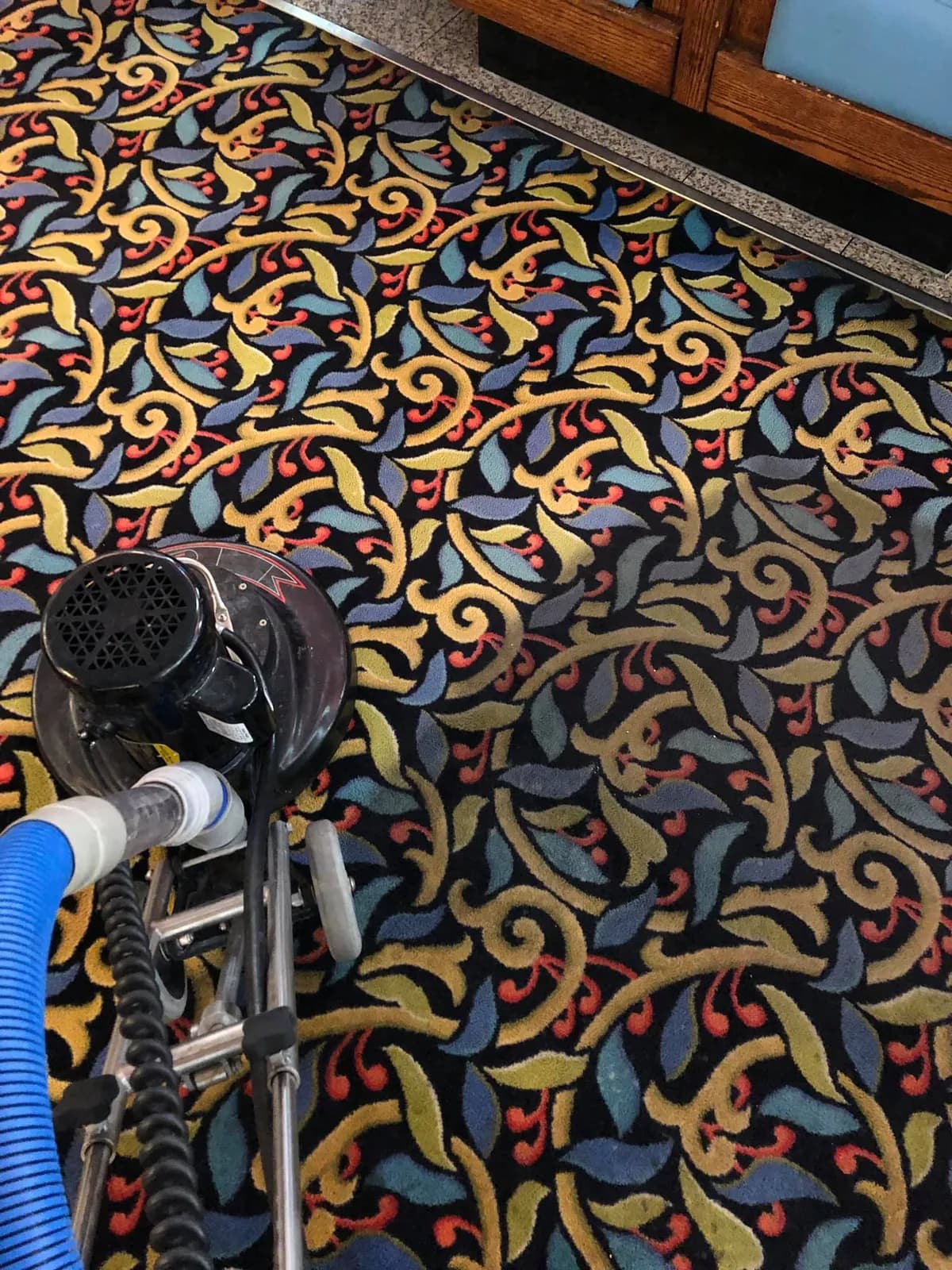
Agitation is the step many do-it-yourself attempts skip, and it's where soil actually comes loose. A brush works the pre-treatment down to the base of the pile, where a lot of the grime sits. A solution sprayed onto the surface can't do that job alone.
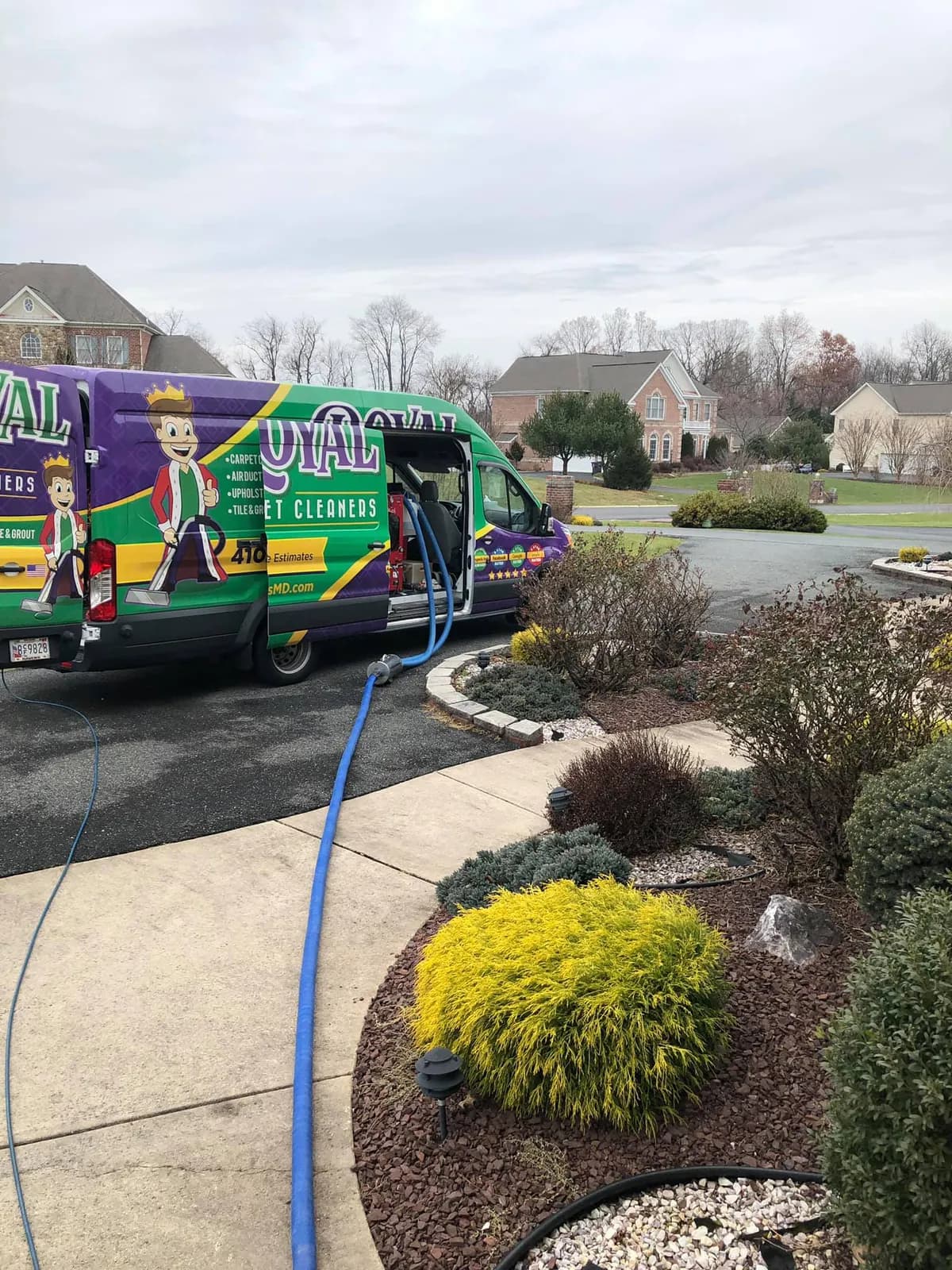
Hot water extraction comes next. Truck-mounted equipment applies a hot cleaning solution into the carpet and pulls it back out with a strong vacuum. The heat helps dissolve the oily soil that cool water tends to leave behind, and the extraction carries the dissolved soil out with the water. The truck-mounted versus portable comparison explains why the equipment matters as much as the heat.
Extraction power also decides how long the carpet stays wet. The more water the machine pulls back out, the less moisture is left in the pad and backing to evaporate. That is why the strength of the vacuum is as important as the temperature of the water.
Deodorizer and grooming
After extraction, a deodorizer goes on to handle lingering odor. It works best once the actual source has been removed. A deodorizer can cover a pet accident that is still soaked into the pad, which is one reason urine odor often needs enzyme pre-treatment in addition to anything applied afterward. A deodorizer is not a substitute for removing the source. If you can still smell a pet accident a day after the visit, tell the company rather than assuming the deodorizer missed it, because a deeper source may need more treatment.
Then the carpet is groomed. A technician brushes the pile in one direction while it's still damp, so the fibers dry lying evenly instead of in random directions. The carpet dries looking more uniform, and the difference is easy to see when you compare it to a corner the crew hasn't reached yet.
Drying: what to expect
Carpet usually dries in 4 to 8 hours. Fiber type, humidity, and airflow all shift that window, and a humid Maryland summer pushes it toward the long end. For a fuller picture of what changes the timing, read how long carpet takes to dry after cleaning. In the meantime, a few habits help:
- Walk on the carpet only in the booties until it's fully dry, since shoes leave prints in the pile.
- Keep pets and young children off it until it's dry. Royal's low-VOC solutions are safe for kids and pets once the carpet is dry, so the wait is worth it.
- Run fans across the carpet. In humid weather, a dehumidifier does more than an open window, because humid outside air can't pull much moisture out of the room.
- If the carpet still feels wet a full day later, call the company. A soaked pad can hold moisture long enough to start smelling, and that is worth checking early.
Where a visit has limits
A professional cleaning removes a lot, but it can't do everything. Old, set-in stains may lighten without disappearing. Dye transfer from a rug, a newspaper, or a dyed fabric can be permanent. Fiber that is already crushed, faded, or damaged won't look new after cleaning. A good technician will tell you where those limits are before the work starts, not after.
Wool and other natural fibers respond differently from synthetic carpet and need a gentler approach, with different products and less agitation. If you know what your carpet is made of, say so when you book, so the crew can plan the visit around it.
Stains that have sat for weeks have had more time to bond with the fiber, so they often need more pre-treatment. Stains can also reappear later when soil or residue is left behind in the carpet. That is the wicking problem explained in why stains come back after cleaning.
Deciding whether a visit is worth it
If your carpet has stains that resisted home treatment, pet odor, or traffic soil that looks worse than the vacuum can handle, a professional visit is probably the right next step. This is the same sequence Royal follows on a carpet visit, and the carpet cleaning service page lists what's included. If you're booking, the prep checklist will help the crew start working right away.
Frequently asked questions
Do I need to move my furniture before the crew arrives?
Not usually. Technicians move standard furniture as part of the job, but you should move anything fragile or valuable yourself and mention any piece that is loose or wobbly.
Why does the carpet look damp and a little uneven when the visit ends?
Freshly extracted carpet still holds moisture in the fiber and the backing, and the pile can look flattened or uneven until it dries fully. Grooming helps it dry more evenly, but full drying usually takes several hours.
Is it safe to walk on the carpet while it's still damp?
Only in the booties the crew leaves for you. Shoes can leave prints in the pile and track fresh soil onto a surface that is still drying, so stay in the booties until the carpet is dry.
Written by
The Royal Carpet Cleaners Team
Royal Carpet Cleaners is a family-owned, IICRC-certified company based in Bel Air, Maryland. Our technicians clean carpet, rugs, upholstery, tile, and hardwood across Harford, Baltimore, Howard, and Cecil counties.