Cat urine is harder to remove than dog urine for two main reasons. It's more concentrated, so it leaves more residue behind when it dries, and it contains sulfur compounds that bacteria turn into strong-smelling thiols. Cats also spray vertical surfaces and return to places they've already marked, which keeps the odor source active. Effective removal means treating the full reservoir with an enzyme product, drying the area well, and starting with a vet check if the behavior is new.
Why cat urine is different
Cats have kidneys that produce very concentrated urine, which is why a small puddle of cat urine often dries to a heavier residue than a similar amount from a dog. When that residue reawakens in humidity, there's more to release.
Cat urine also carries a sulfur compound called felinine. Bacteria in the carpet, pad, and backing break felinine down into thiols, which have the sharp, sulfurous note many people describe as the smell that lingers after a regular cleaning. Ammonia from the urea breakdown adds to it, so cat urine often smells sharper than dog urine.
Spraying is the other difference. Many cats mark vertical surfaces: a wall, the base of a couch, a door frame, or the leg of a table. That puts urine on drywall, painted trim, and wood, where carpet cleaning can't reach. Neutered cats spray less often in many cases, and intact males are the most likely to spray.
Start with the vet if the behavior is new
A cat that suddenly starts urinating outside the litter box is telling you something, and the cause is often medical. Urinary tract infections, bladder inflammation, urinary crystals or stones, kidney disease, diabetes, and an overactive thyroid can all change litter box habits. Arthritis is another common cause, because a cat in pain may skip a high-sided box or a box that's hard to reach.
Call your vet before you spend a weekend scrubbing. A vet can rule out the medical causes, and that visit also gives you a baseline if the behavior comes back. Stress from a new pet, a move, or a change in the household can cause marking too, and your vet can help you sort that out as well.
Litter box setup
The common guidance is one litter box per cat, plus one extra. Place boxes in quiet, easy-to-reach spots away from loud appliances and busy doorways. Keep them clean, because many cats avoid a dirty box. If arthritis is part of the picture, a box with a low entry and a bigger footprint often helps.
Some owners also try synthetic feline pheromone diffusers. Ask your vet whether that's worth trying before you spend money on it, since results vary.
A step-by-step treatment for cat urine
- Blot fresh urine right away. Press dry paper towels onto the spot until nothing more comes up. Don't rub.
- Apply an enzyme product labeled for urine. Saturate the carpet, but don't flood the pad. Cat urine is more concentrated, so plan on enough product to reach the backing.
- Keep it wet for the full dwell time. Labels vary, but many ask for 10 to 15 minutes of wet contact. Follow yours, and re-wet with product if the spot starts to dry.
- Test vertical surfaces before you treat them. Choose a hidden corner, apply a small amount of product, and check the finish for discoloration. If the odor has soaked into drywall or unfinished wood, cleaning won't reach it. Some people seal the surface with a stain-blocking primer after cleaning, and a painter can tell you whether that's the right fix for your wall.
- Dry the area completely. Fans and a dehumidifier help, because a damp spot keeps the odor cycle going.
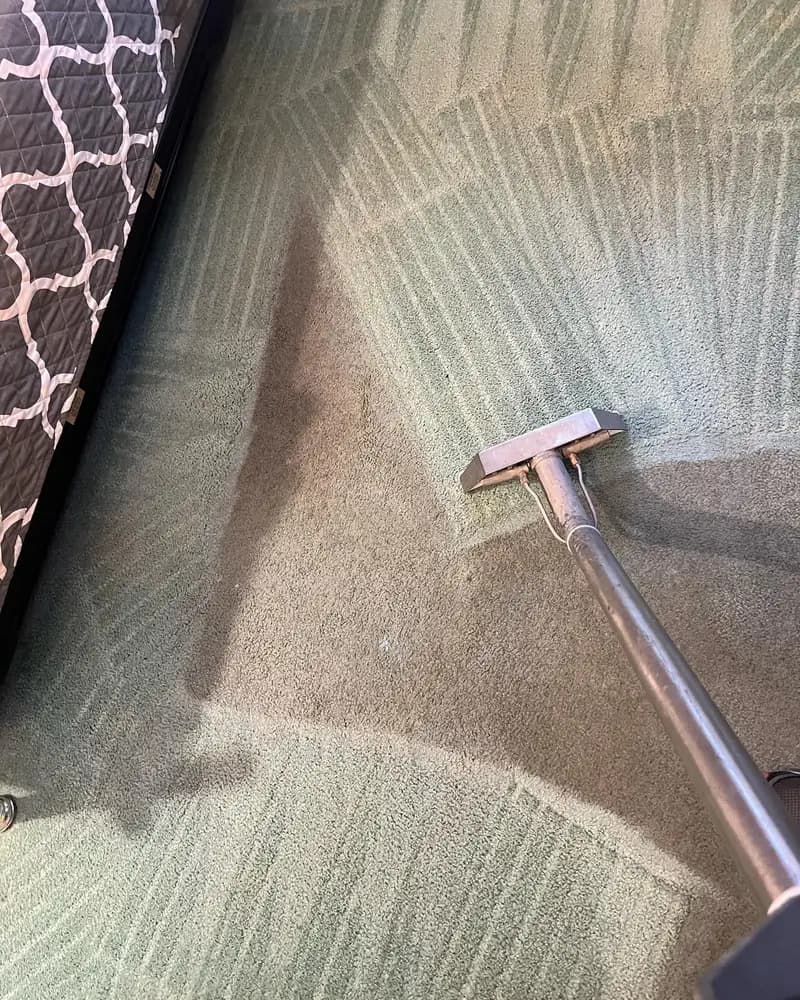
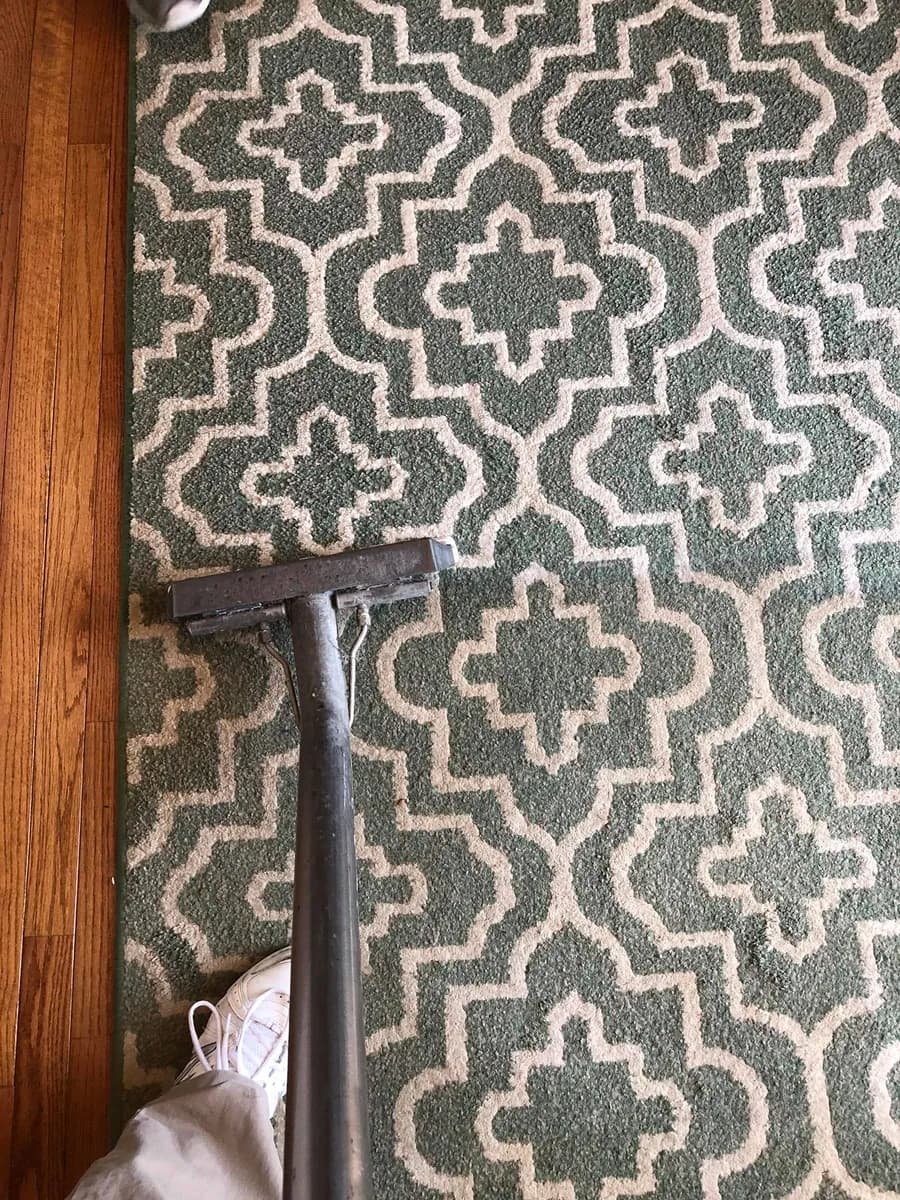
- Give carpet a professional extraction if the odor persists. A pro can pre-treat the spot, extract it, and deodorize the carpet, which is useful when the residue reaches the pad.
What not to do
- Don't use ammonia-based cleaners. Ammonia smells like urine to a cat, and it can invite the cat back to the same spot.
- Don't use bleach on urine. It bleaches dye, and it can release toxic gas when it meets the compounds in urine, so keep it out of the process.
- Don't layer products. Mixing an enzyme cleaner with vinegar, ammonia, or disinfectant sprays can stop the enzymes from working.
- Don't use essential oils to cover the smell. Several oils are harmful to cats, and the next section covers why.
- Don't punish the cat. Stress makes marking more likely, and a cat won't connect punishment with the spot.
- Don't rely on a deodorizer. A scent covers the odor for a short time, and the residue keeps working underneath.
Essential oils and cats
Some common scented cleaners include essential oils that are a problem for cats. Tea tree, pine, wintergreen, and many citrus oils are on the list of concerns for cats, because cats process certain compounds in those oils much more slowly than dogs or people do. Keep those products away from cat areas, and read the label of any "natural" cleaner before you use it near a cat. The pet-safe cleaning products guide goes into the ingredients in more detail.
When a professional treatment makes sense
If the odor is in more than one room, in the carpet and the pad, or it returns every humid season, a professional visit is a reasonable next step. Royal Carpet Cleaners uses enzyme pre-treatment for pet urine and odor, followed by extraction and a deodorizing step. A technician can also tell you whether the odor has gone past the carpet and needs a different kind of work. For the carpet side of the job, see our carpet cleaning service, and if you want to understand the enzyme step better, read how enzyme cleaners work on pet stains.
Frequently asked questions
Can I use the same enzyme cleaner I use for dog accidents?
Often yes, as long as the label covers urine in general. Cat urine is more concentrated, so use enough product and the full dwell time, and expect to repeat the process on older spots.
How do I stop my cat from going back to the same spot?
Clean the spot thoroughly first, then limit access for a few weeks with a closed door or a piece of furniture. Keep litter boxes clean, and if the behavior continues, ask your vet about the underlying cause.
Will a cat's urine odor fade on its own if I just leave it?
Usually not. Residue in the carpet, pad, or wall keeps releasing odor, and humidity tends to bring it back. Leaving it allows the cat to keep marking the same place.

Written by
The Royal Carpet Cleaners Team
Royal Carpet Cleaners is a family-owned, IICRC-certified company based in Bel Air, Maryland. Our technicians clean carpet, rugs, upholstery, tile, and hardwood across Harford, Baltimore, Howard, and Cecil counties.