An enzyme cleaner removes pet odor by digesting the organic material in the stain, not by covering it with a fragrance. Enzymes are proteins that speed up chemical reactions, and the ones in these products break down the proteins, starches, and other organic compounds that hold urine in the fiber and feed the bacteria that make the smell. They only do that job when the product stays wet long enough and nothing has disabled the enzymes first.
What the enzymes are actually doing
Pet urine is mostly water, but what's left behind after it dries is organic. It contains urea, creatinine, small proteins and peptides, and pigments, plus the mineral salts that remain when the water evaporates. Bacteria in the carpet, pad, and backing feed on that organic material, and their waste is a large part of the odor you notice later.
Enzyme products carry specific enzymes for specific jobs. Proteases break down proteins, lipases break down fats, and amylases break down starches. A good pet formula uses a blend because urine residue is a mix of organic compounds, and no single enzyme handles all of it. Some products also contain live bacteria, which keep eating the residue for days after the application. Those are often labeled bacteria-based or bio-enzymatic.
Enzymes don't do much to the mineral salts. A spot can feel damp and still have salt crystals in the pad. That's one reason an enzyme treatment can look finished and still smell a little afterward. Because of that, an enzyme treatment is usually one step in a bigger job rather than the whole job. Why the pet urine smell comes back walks through where the rest of the residue hides.
How to use an enzyme cleaner step by step
- Blot first. Press dry paper towels or a clean white cloth onto fresh urine until nothing more comes up. Don't rub, because rubbing pushes urine deeper into the backing.
- Saturate the spot. Apply enough product to wet the carpet fibers all the way down to the backing, but don't flood the pad. Too much water feeds the same bacteria you're trying to starve. Some products are concentrates that need diluting, and the label's ratio is there for a reason, so don't guess.
- Keep it wet for the full dwell time. The label controls this, not your memory. Many labels call for 10 to 15 minutes of wet contact, and some ask for much longer. If the spot starts to dry, re-wet it with more of the product, not plain water.
- Blot again. Press up the excess liquid with fresh towels.
- Let it air dry. Open a window if you can, and run a fan across the spot. Don't add a soap rinse unless the label says so, because leftover soap attracts dirt and makes the area sticky later.
What makes enzymes fail
Enzymes are proteins, and proteins are sensitive. Most of the failures people see come from a handful of mistakes:
- Hot water or steam. Heat denatures enzymes, which means it breaks the shape they need to work. Use cool or lukewarm water with an enzyme product, never hot. Heat also sets protein stains like urine, so steam makes the problem worse.
- Mixing products. Bleach, ammonia, vinegar, and disinfectant sprays can stop enzymes from working, and they can kill the bacteria in bacteria-based products. Bleach is the most dangerous combination, because urine contains ammonia-producing compounds, and bleach reacting with them can release toxic chloramine gas.
- Rinsing or extracting too soon. If you pull the product up before the dwell time ends, the enzymes leave with it. Rental machines are often the culprit, since people run them right after spraying.
- Letting it dry out. Enzymes need moisture to move through the residue. A spot that dries in an hour has only had an hour of work.
- Expecting one pass to fix a deep stain. A fresh spot may clear in one application. An old stain that has dried into the pad often takes two or three rounds. If you're unsure whether any odor is left, the UV light guide explains how to check for residue you can't smell.
How to tell whether it worked
Give the spot a full day to dry before you judge it, and check it under the conditions where you first noticed the smell. A spot that smells only when it's damp, or only in humid weather, probably still has residue below the surface. A clean smell on one dry afternoon doesn't prove the job is finished, because the residue can wake up again when the air changes.
Enzyme products compared
| Product type | What it does | Watch out for |
|---|---|---|
| Enzyme-only cleaner | Digests proteins, fats, and starches in the residue | Needs full dwell time and no mixing |
| Enzyme plus live bacteria | Enzymes start the job and the bacteria keep consuming the residue | Disinfectants and heat can kill the bacteria |
| Fragrance or deodorizer spray | Masks the smell for a short time | Doesn't remove the source, so the odor returns |
| Peroxide and dish soap (DIY) | Oxidizes some stain compounds | Can lighten carpet dye, and is risky on wool and silk |
When a pro makes sense
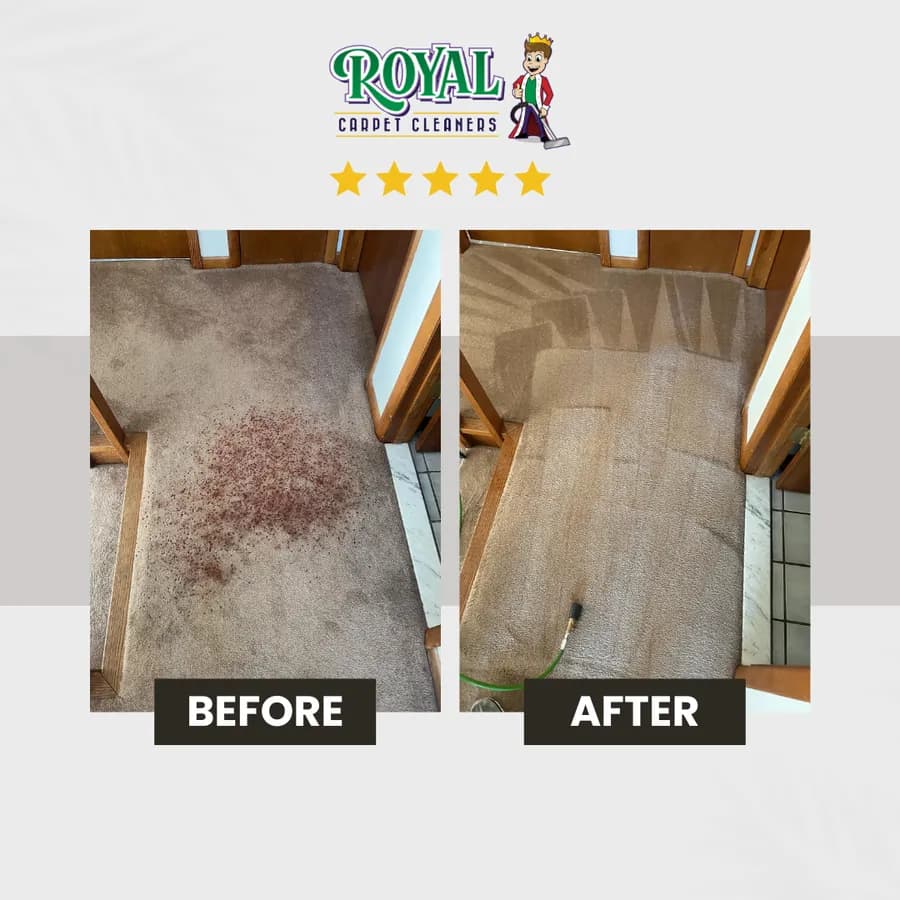
Enzymes work best on fresh, accessible spots that you can treat quickly and fully. If the odor is still there after a couple of careful rounds, or if you suspect urine went into the pad or subfloor, a professional visit is the next step. Royal Carpet Cleaners uses enzyme pre-treatment for pet urine and odor as part of a standard process: pre-vacuum, pre-treat the spots and traffic lanes, agitate, extract, then deodorize. Ask for the spots to be pre-treated before the hot water extraction starts, and tell the technician exactly where the pet has been going. You can book a carpet cleaning online or read more about the carpet cleaning service.
If you're not sure whether an enzyme product will help a particular spot, read the back of the bottle, test a hidden corner first, and be patient with the dwell time. Most of the disappointment comes from rushing the last few minutes.
Frequently asked questions
Can I use an enzyme cleaner on a stain that's already dry?
Yes, but expect to need more product and more time. Re-wet the area thoroughly so the enzymes can reach the residue, then keep it damp for the label's dwell time. Old, deep stains often take more than one round.
Why does my carpet still smell after I used an enzyme cleaner?
Most often the product didn't reach deep enough, or it dried out before it finished working. The urine may have soaked into the pad, and enzymes applied only to the carpet surface can't reach it. Mineral salts left behind also don't respond to enzymes.
Is it safe to use an enzyme cleaner around pets and kids?
Most enzyme cleaners are designed for household use, but the label is the authority on safety. Keep pets and kids off the area until it's fully dry, and ventilate the room while it dries.
Written by
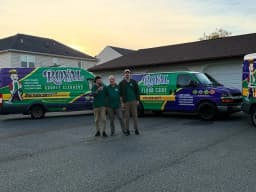
The Royal Carpet Cleaners Team
Royal Carpet Cleaners is a family-owned, IICRC-certified company based in Bel Air, Maryland. Our technicians clean carpet, rugs, upholstery, tile, and hardwood across Harford, Baltimore, Howard, and Cecil counties.