The pet urine smell comes back because most of the urine never stayed on the carpet. It soaked through the fibers into the backing, the pad, and sometimes the subfloor, and it left behind residue that keeps releasing odor long after the top of the carpet looks clean. Humidity is the trigger: the residue takes on moisture from the air, and the smell comes back with it. Surface cleaning can lift what's near the top, but it can't reach the reservoir underneath.
What urine leaves behind below the surface
When urine dries, the water leaves and the solids stay. Those solids include urea, which is the main nitrogen compound in urine, along with mineral salts that were dissolved in it. A small spill on the carpet face can hide a much larger amount of residue in the layers beneath, because liquid moves downward through the fiber, through the backing, and into the pad faster than most people expect.
The pad is the real problem. Foam and fiber pads hold moisture, they hold it for a long time, and they're hard to dry from above. Every time the pad gets damp, dissolved residue moves around inside it, and the odor compounds it releases can move up through the carpet. If the urine went through the pad and reached the subfloor, the residue can sit in wood or concrete for a long time.
Why humid air brings the smell back
Urea is hygroscopic, which means it pulls water out of the air. On a dry day, the residue stays crystalline and quiet. On a muggy day, it takes on moisture, becomes slightly damp, and releases the odor compounds it has been holding. Bacteria in the pad also become more active in warm, damp conditions, so the smell can strengthen over a few days.
That's why many people notice the smell most in humid weather and less in the dry air of a heated house in winter. In Maryland, the muggy stretches of summer and the damp days of late spring and early fall are when residue most often reawakens. The dry heated air of winter slows the cycle down, but it doesn't remove anything. The residue is still there when the humidity climbs again.
Troubleshooting: what the smell is telling you
Where and when the smell shows up is one of the best clues you have. Use this table to narrow it down before you start treating the whole room.
| What you notice | Most likely cause | What to do next |
|---|---|---|
| Smell returns a few days after cleaning | Residue still in the pad or backing | Dry the area fully, then treat it again with an enzyme product, and consider a professional extraction |
| Smell only on humid days | Residue taking on moisture from the air | Run a dehumidifier, dry the spot thoroughly, and check whether the pad is involved |
| Smell strongest along a wall or baseboard | Urine moved under the carpet edge or into the subfloor | Pull back the carpet edge and inspect the pad and subfloor before cleaning more carpet |
| Carpet looks clean but feels stiff or sticky | Mineral salts or leftover soap residue | Rinse with plain water if the label allows, and remove soap residue before it attracts dirt |
What actually helps
- Find every affected spot. Check the whole room, including behind doors, under furniture, and along walls. Odor often has a larger footprint than the stain you can see.
- Treat the spot, but don't flood it. Use enough enzyme product to reach the backing without soaking the pad. Too much water in the pad makes the problem worse.
- Dry it completely. Use fans across the area and keep the room's humidity down. A damp pad will restart the cycle.
- Recheck after it's dry. Give the area a day, then sniff the spot in the same conditions where you first noticed the smell. If it's still there, the residue is deeper than the surface treatment reached.
Heat deserves a warning. Steam cleaners and hot water set protein stains like urine, and they push the residue deeper into the pad. Keep steam out of the process until the spot is fully treated.
Moisture from the outside is the other thing that can undo good work. A damp basement, a slow leak under a sink, condensation that runs down a window onto the carpet edge, or a dehumidifier that's full and shut off all keep the residue reawakening. Find the moisture source before you spend more time on the carpet, because cleaning can't win against a room that stays wet.
When the problem is under the carpet
Some situations are beyond surface cleaning. If urine has soaked into the pad, or if the smell persists after careful treatment, the pad may need replacement, and that's a flooring installer's job. If the subfloor is wood or concrete and it's holding residue, it may need specialized treatment. Royal Carpet Cleaners doesn't do carpet repair or stretching, so for those jobs the honest answer is to call a flooring specialist.
When a professional cleaning makes sense
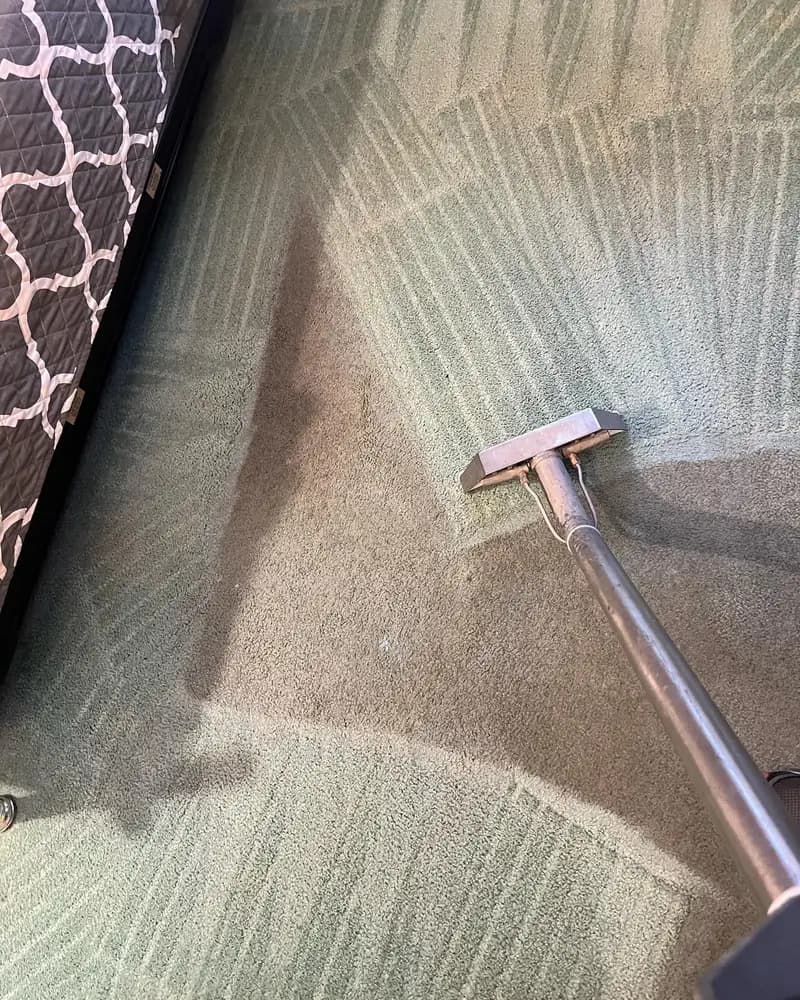
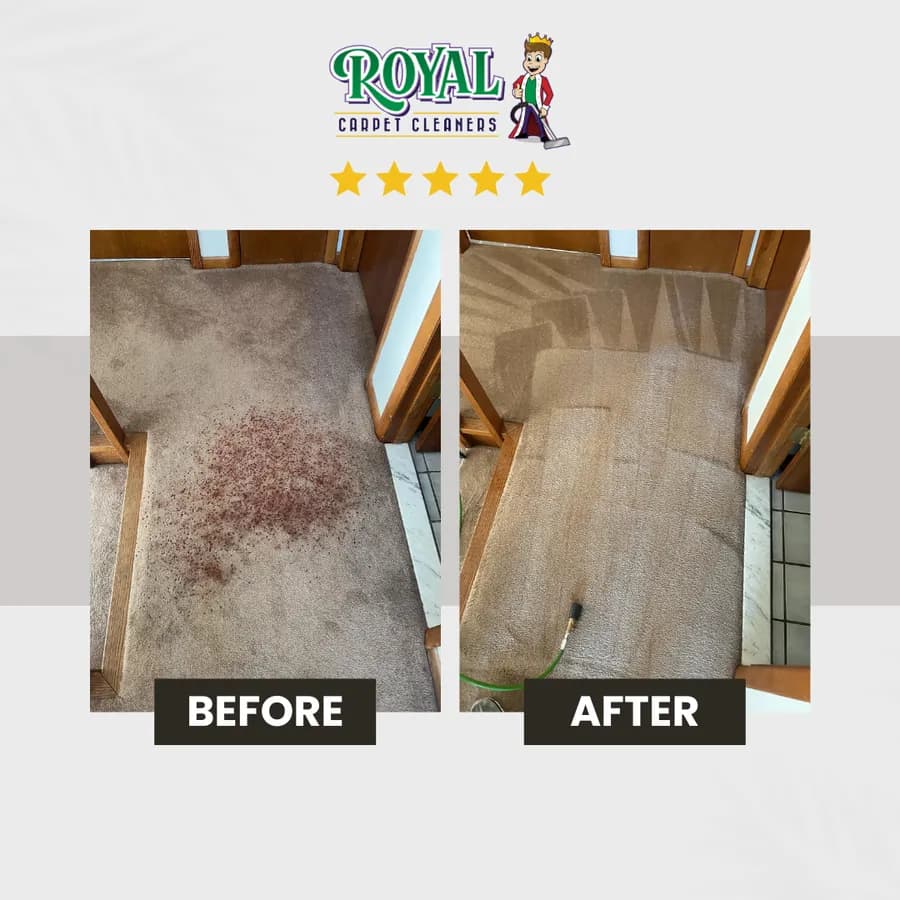
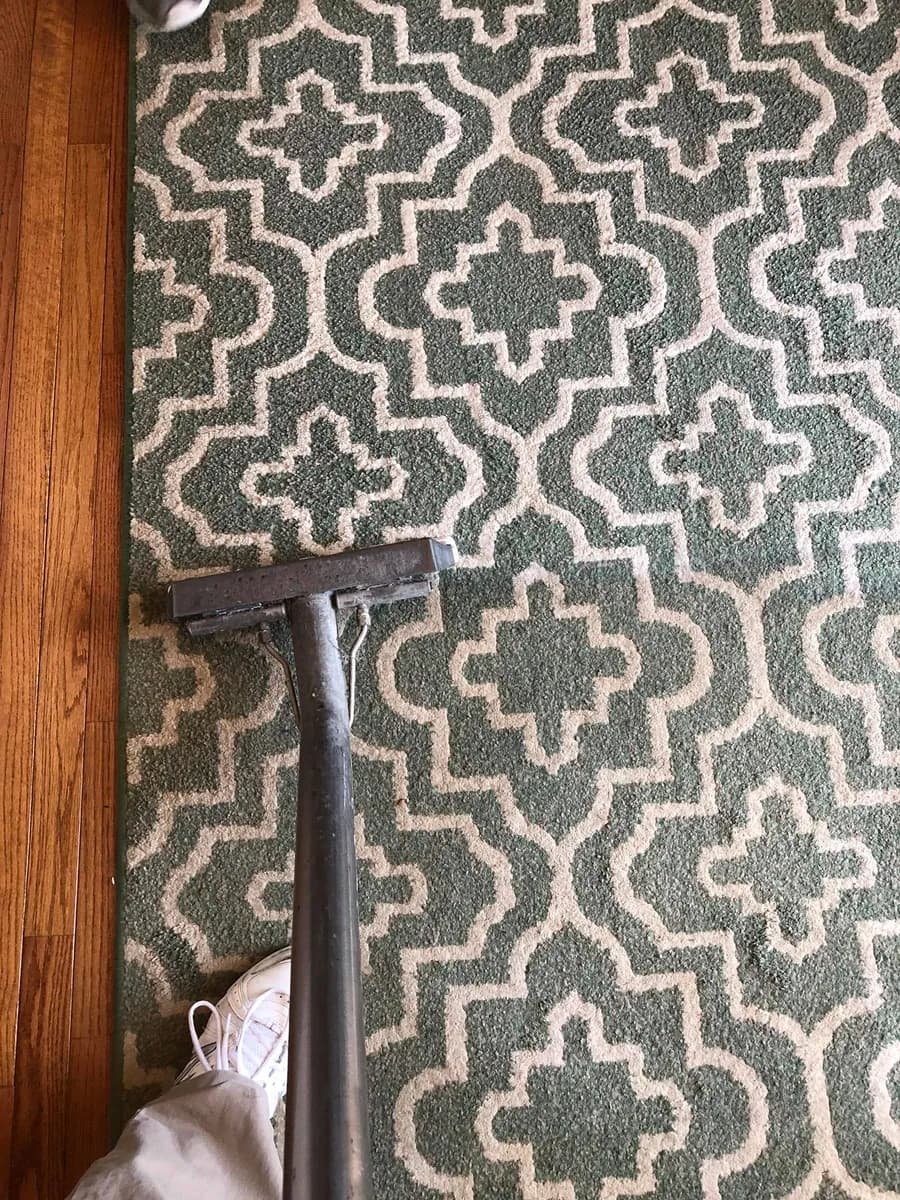
A professional visit makes the most sense when the odor is in several spots, when it comes back every humid season, or when you've cleaned the surface carefully and the smell persists. A technician can pre-treat the spots and traffic lanes, extract the cleaning solution, and deodorize the carpet, which helps when the problem is in the carpet and the top of the pad. Read more about our carpet cleaning service, and if you're trying to understand the enzyme step, see how enzyme cleaners work on pet stains. For the rug underneath, a rug pad can trap moisture just as easily as carpet can, so check it when you lift the rug.
Frequently asked questions
Can a carpet pad be cleaned, or does it need to be replaced?
Surface cleaning can't reach the pad, so a lightly affected pad usually can't be fully restored from above. If urine has soaked through and the smell persists after careful cleaning, replacing the pad is often the practical fix. A flooring installer handles that job.
Does a dehumidifier actually help with pet urine smell?
Yes, indirectly. Drier air keeps the urine residue from taking on moisture, so it releases less odor. A dehumidifier won't remove the residue, so it works best alongside an enzyme treatment and a thorough dry.
How can I tell if the smell is in the carpet or in the subfloor?
If the smell is strongest right at the edges of the room, along baseboards, or under the carpet where you can't reach, the source is likely below the surface. A smell that fades in dry weather and returns with humidity points toward the pad or subfloor.

Written by
The Royal Carpet Cleaners Team
Royal Carpet Cleaners is a family-owned, IICRC-certified company based in Bel Air, Maryland. Our technicians clean carpet, rugs, upholstery, tile, and hardwood across Harford, Baltimore, Howard, and Cecil counties.