
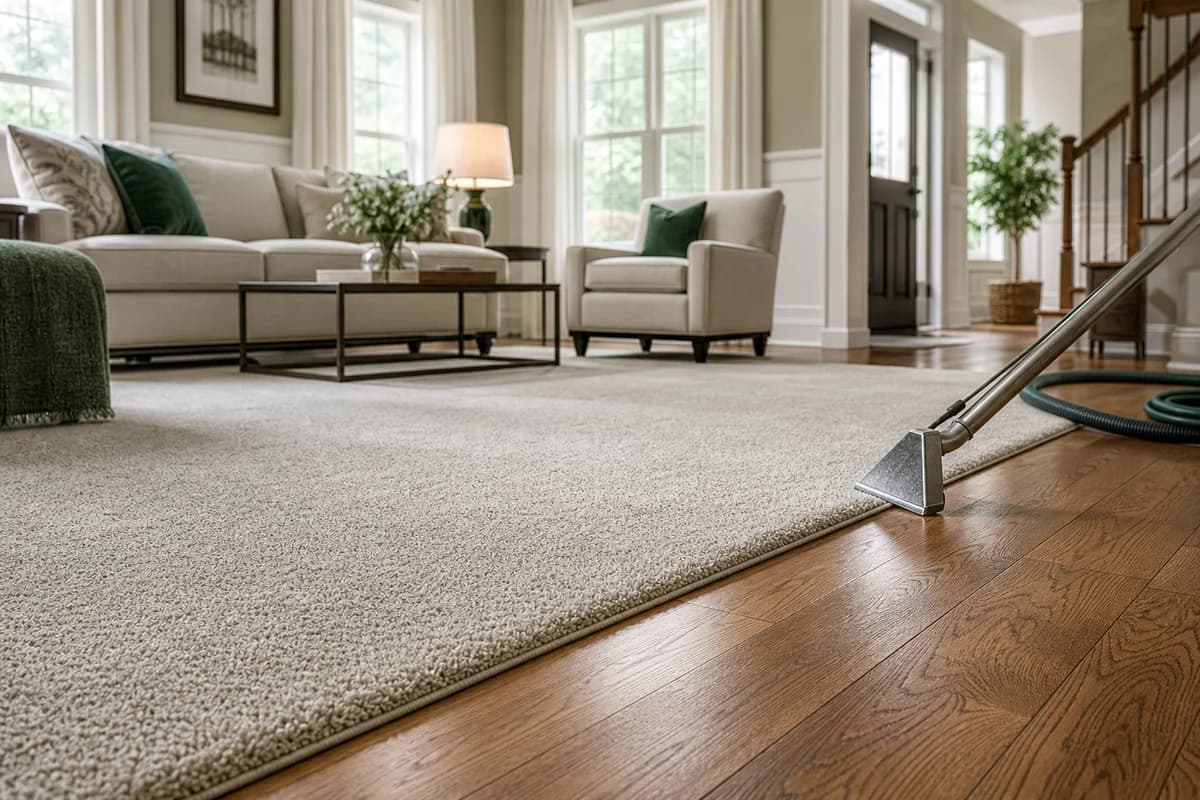
Coffee and tea stains set quickly because they're full of tannins and other polyphenols, which latch onto carpet fibers as the liquid dries. A fresh spill is usually easy to lift if you blot it at once with cool water and then rinse with a mild acidic solution. Your goal is to remove the color before it bonds, and then keep residue from wicking back up as the spot dries.
Why coffee and tea leave such a strong mark
Tea is rich in tannins, and coffee carries its own mix of polyphenols and pigments. Both bind to synthetic fibers like nylon, and they bond even more strongly to protein fibers such as wool and silk. Warmth speeds that bonding, so a spill near a heating vent or in a sunny room sets faster than the same spill on a cool floor.
Wet spots also look different from dry ones. A saturated fiber shows the stain more intensely than it will once it dries, so it's easy to misjudge the spot while it's still wet. Judge the spot only after it's completely dry.
Cream and sugar change the job
Milk, cream, and sugar add their own complications, and the drink in the cup determines where you start.
| Drink | What's in the stain | Where to start |
|---|---|---|
| Black coffee | Polyphenols and pigments | Cool water, then a mild acid rinse |
| Black tea | Tannins and strong pigment | Same method, and test first on light synthetics |
| Milky tea or a latte | Tannins plus dairy protein and sugar | Cool water and an enzyme cleaner first, then the tannin steps |
| Sweetened iced tea | Tannins, sugar, and sometimes added color | Thorough rinsing to clear the sugar, then the tannin steps |
Dairy adds protein, which means heat is off the table. Sugar leaves a sticky film that attracts dirt and needs thorough rinsing. A stain with both is really two problems in one.
Step-by-step: cool water and a mild acid rinse
- Blot right away. Press a dry white cloth onto the spill, hold for a few seconds, and lift. Move to a clean section of the cloth as it fills.
- Dilute with cool water. Dampen a clean cloth in cool water and blot the spot. Keep it light, so the carpet stays damp and never soaked.
- Apply a mild acid rinse. Mix about one tablespoon of plain white vinegar into a cup of cool water. Dab it onto the spot, let it sit two or three minutes, and blot. The acid helps release some tannin color and neutralizes soap residue that might be left behind.
- Use a dish-soap solution if color remains. Mix about ¼ teaspoon of clear dish soap into a cup of lukewarm water. Dab a small amount on the spot, let it sit about five minutes, and blot.
- Rinse until the towel stays clean. Blot with plain cool water to remove soap and acid. Leftover residue is the main cause of a second stain.
- Dry it completely. Press a stack of dry towels on the spot, weigh it down, and run a fan. Humid Maryland summers slow drying, so a spot can stay damp much longer than you'd expect. Give it extra time.
Why the brown outline comes back
Once a tannin spot dries, you may notice a faint brown ring around the edge. This is often called a "brown-out," and it usually means residue from the stain or the cleaner has wicked up from the pad as the carpet dried. It isn't new staining. Re-wet the area with cool water, blot it with a dry towel, and check again once it's fully dry.
If the outline keeps returning, the residue is probably deep in the backing, and that's a sign to bring in a professional. Our guide to why stains come back after cleaning covers the mechanics in more detail.
What not to do
- Don't use hot water or a steam machine. Heat speeds the bonding of tannins to fibers.
- Don't scrub with a brush. Bristles push the pigment down and fray the pile.
- Don't use peroxide on wool, silk, or dyed fabric. It can lighten the color or weaken the fiber, so test a hidden spot first.
- Don't use a colored towel. Dye can transfer onto a light carpet and create a second stain.
- Don't let it sit overnight. Tannins bond more firmly the longer they stay on the fiber.
Herbal teas, fruit teas, and iced drinks
Not every tea behaves like black tea. Hibiscus and other berry herbal teas get their color from pigments that act more like red wine, so the approach in how to get red wine out of carpet applies to them. Sweetened fruit teas can also contain dye, which behaves like the stains described in red dye stains.
Iced drinks deserve a closer look. Syrup and sugar leave a sticky film that can hold dirt for weeks if it isn't fully rinsed. Once the color lifts, rinse with cool water until the cloth comes up clean, then check the spot again after it dries.
Coffee on rugs and delicate fibers
Wool and silk are protein fibers. They bind tannins more tightly than nylon does, and they react badly to strong alkaline cleaners. On a rug, start with cool water and nothing else. Press a dry white cloth onto the spot, then a damp one, and repeat until the cloth stops picking up color.
Don't reach for vinegar or peroxide on a wool rug until a hidden test shows how the fiber reacts. Many rugs also have a backing that holds moisture against the floor, so don't let a treated rug sit damp. Let it dry on a raised surface with airflow underneath rather than flat on a cool floor.
When to call a professional
Call a pro if the spot is still visible after two careful rounds, if the carpet is wool or a delicate rug, or if a sugary spill soaked through to the pad. Residue deep in the backing is hard to reach at home, and that's where a brown outline usually comes from. At Royal Carpet Cleaners, we pre-treat spots and traffic lanes before extraction, so residue has a clear path out of the carpet. You can schedule carpet cleaning online at https://book.royalservicesmd.com whenever it's convenient.
Frequently asked questions
Is coffee the same stain as tea?
They're close cousins. Both carry tannins and other polyphenols, so the same method works for both. Milk, cream, and sugar change the approach, because they add protein and residue that need their own treatment.
Can I use a steam cleaner on a coffee stain?
Avoid it. Heat speeds the bonding of tannins to fibers, and a home steam machine can push moisture into the pad. Blot with cool water instead, and save steam for after the stain is gone.
Can I use 3% hydrogen peroxide on a coffee stain?
On a light, colorfast synthetic carpet, a small test with 3% peroxide is reasonable after the basic steps fail. On wool, silk, or any dyed rug, skip it unless a technician advises otherwise.

Written by
The Royal Carpet Cleaners Team
Royal Carpet Cleaners is a family-owned, IICRC-certified company based in Bel Air, Maryland. Our technicians clean carpet, rugs, upholstery, tile, and hardwood across Harford, Baltimore, Howard, and Cecil counties.


