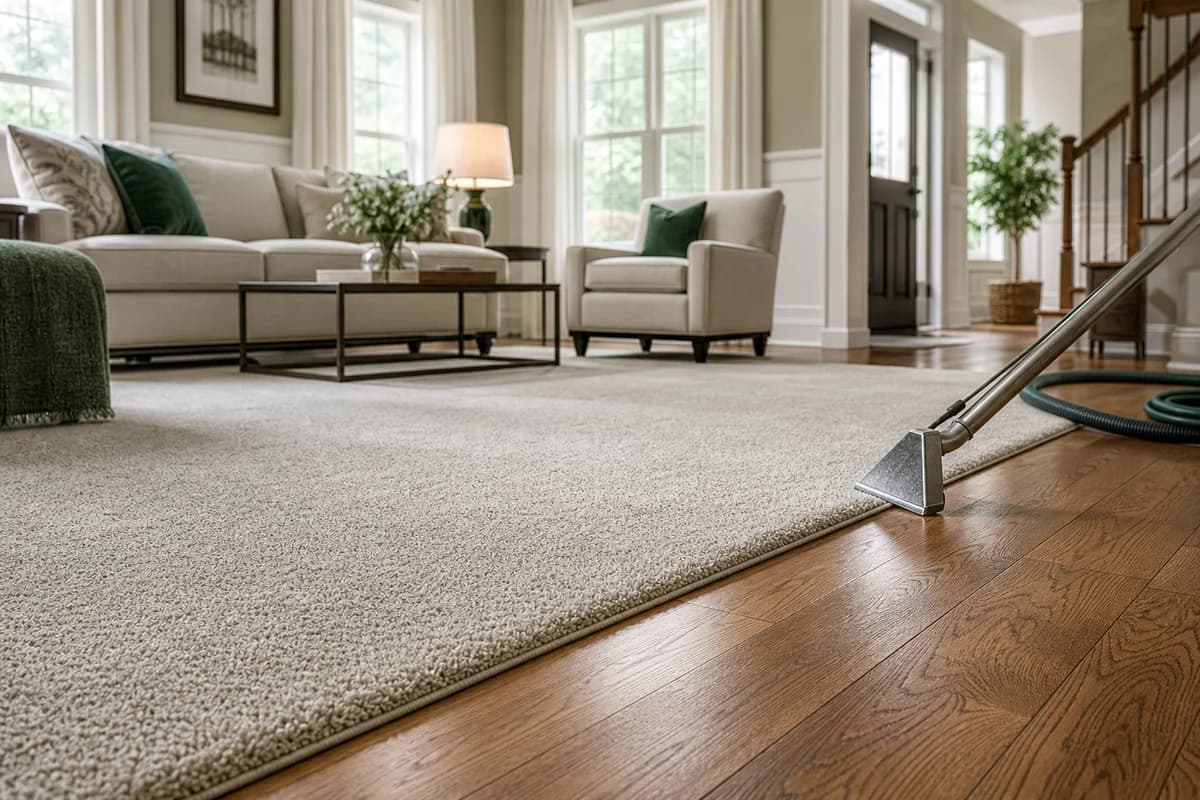
Dust mites are too small to see, and you can't clean them out of a home completely. What you can do is cut down the food they live on, the allergen they leave behind, and the humidity that lets them thrive. Regular vacuuming, periodic professional cleaning, and keeping indoor humidity below about 50 percent do the most for carpet. Cleaning reduces what's in the fibers, but it won't eliminate the mites.
What dust mites are and what they eat
Dust mites are microscopic relatives of spiders, and most homes have them. They feed on the skin flakes people and pets shed every day, which is why bedrooms, couches, and carpets make good habitats. They don't bite.
The allergen is the part people react to. It comes from the mites' droppings and body fragments, which end up in the dust. Once that dust is stirred up, the particles can be breathed in, and that's why a carpet full of dead mites can still cause symptoms.
Why humidity matters more than most people expect
Dust mites take in water from the air around them. Above roughly 50 percent relative humidity they do well, and when humidity stays low for long stretches they struggle. That's why mite populations tend to climb in humid months. Summer humidity and musty smells in Maryland homes covers how the state's summers push indoor moisture up.
A digital hygrometer tells you what your rooms are actually doing. Check the bedroom and the main living area, since those rooms have the most people and the most textiles. If readings sit above 50 percent for days at a time, a dehumidifier or a properly sized air conditioner is the practical fix.
Vacuuming: what helps and what stirs things up
Vacuuming is the most important habit, but how you do it matters. This table compares common approaches:
| Approach | What it does |
|---|---|
| One quick pass with a basic machine | Picks up surface debris and leaves allergen deeper in the pile |
| Slow, overlapping passes | Lifts more material from the base of the pile |
| Open-exhaust vacuum | Sends the finest dust back into the room |
| Sealed system with a HEPA filter | Holds the fine particles that would otherwise blow back out |
| Upholstery and crevice tools | Reach seams and cushions that carpet tools miss |
Empty the canister or bag outside when you can, and clean or replace the filter on schedule. Vacuum mattresses, sofas, and pillows as well as the floor, since dust mite allergen collects on any soft surface the mites can reach. A full or clogged vacuum loses suction, and then it mostly moves dust around. For a fuller routine, see how to vacuum carpet the right way.
Carpet construction matters too. Low-pile carpet has less fiber to hold debris, so it's generally easier to vacuum thoroughly and to extract. Thick, plush pile holds more dust, which isn't a reason to avoid it, but it does mean a heavy-pile carpet needs a tighter vacuuming schedule.
What hot water extraction does, and what it can't
When a professional cleans your carpet, the crew pre-vacuums, pre-treats the traffic lanes and spots, agitates the fibers, and then rinses and extracts with hot water. That removes embedded dust and debris from deep in the pile, including material a vacuum can't reach. It's a useful step against allergen buildup in carpet.
What it can't do is keep mites from coming back. If the carpet stays damp or the room stays humid, mites can settle back in. Carpet usually dries in 4 to 8 hours depending on fiber, humidity, and airflow, so run fans and keep the room well ventilated afterward. Hot water extraction versus dry carpet cleaning explains why the drying step matters.
Bedding and the rooms where you sleep
Bedrooms deserve their own plan, because you spend hours in them every night. Here's a practical routine:
- Wash sheets, pillowcases, and blankets weekly in hot water, around 130 degrees Fahrenheit where the fabric allows.
- Use zippered covers designed for dust mite control on mattresses and pillows.
- Vacuum the mattress edges, bed frame, and headboard with an upholstery tool.
- Keep stuffed toys and piled clothing off the bed and out of the bedroom.
- Consider hard floors or low-pile rugs in the bedroom, since they give dust fewer places to hide.
Drying matters for textiles, too. In humid weather, air-drying sheets and blankets indoors can leave them damp for hours, and damp fabric is a friendlier home for mites than dry fabric. A hot dryer cycle finishes the job faster and keeps moisture from lingering.
What no routine can promise
No cleaning method removes every dust mite, and no product eliminates them for good. What you can do is lower the allergen load and the humidity, then keep both there. If you or someone at home has a dust mite allergy or asthma, follow your doctor's advice about treatment, and don't treat cleaning as a medical fix. For the bigger picture on allergies, see carpet cleaning for allergies and indoor air quality.
When a professional cleaning makes sense
If the carpet hasn't been professionally cleaned in a year or more, or someone in the house reacts to dust in the bedroom or living room, a deep cleaning is a sensible step. Royal Carpet Cleaners uses low-VOC solutions that are safe for kids and pets once dry, and our carpet cleaning service runs from pre-vacuum through grooming. We'd suggest testing any home product in a hidden spot first. Book online at https://book.royalservicesmd.com, or call (410) 569-2877 if you'd like to talk through your rooms first.
Frequently asked questions
Do dust mites bite people?
No. Dust mites don't bite or burrow into skin, and they aren't an infestation in the way bed bugs are. The issue is their waste and body fragments, which can trigger allergy symptoms in sensitive people.
Are dust mites worse in carpet than on hard floors?
Carpet holds dust deep in the pile, where mites can keep living and feeding. Hard floors give them fewer hiding places and are easier to wipe clean, though dust still settles on them.
Does an air purifier get rid of dust mites?
A purifier with a true HEPA filter can capture airborne allergen particles in the room where it runs. It doesn't clean the dust already in the carpet, so pair it with vacuuming and humidity control.

Written by
The Royal Carpet Cleaners Team
Royal Carpet Cleaners is a family-owned, IICRC-certified company based in Bel Air, Maryland. Our technicians clean carpet, rugs, upholstery, tile, and hardwood across Harford, Baltimore, Howard, and Cecil counties.