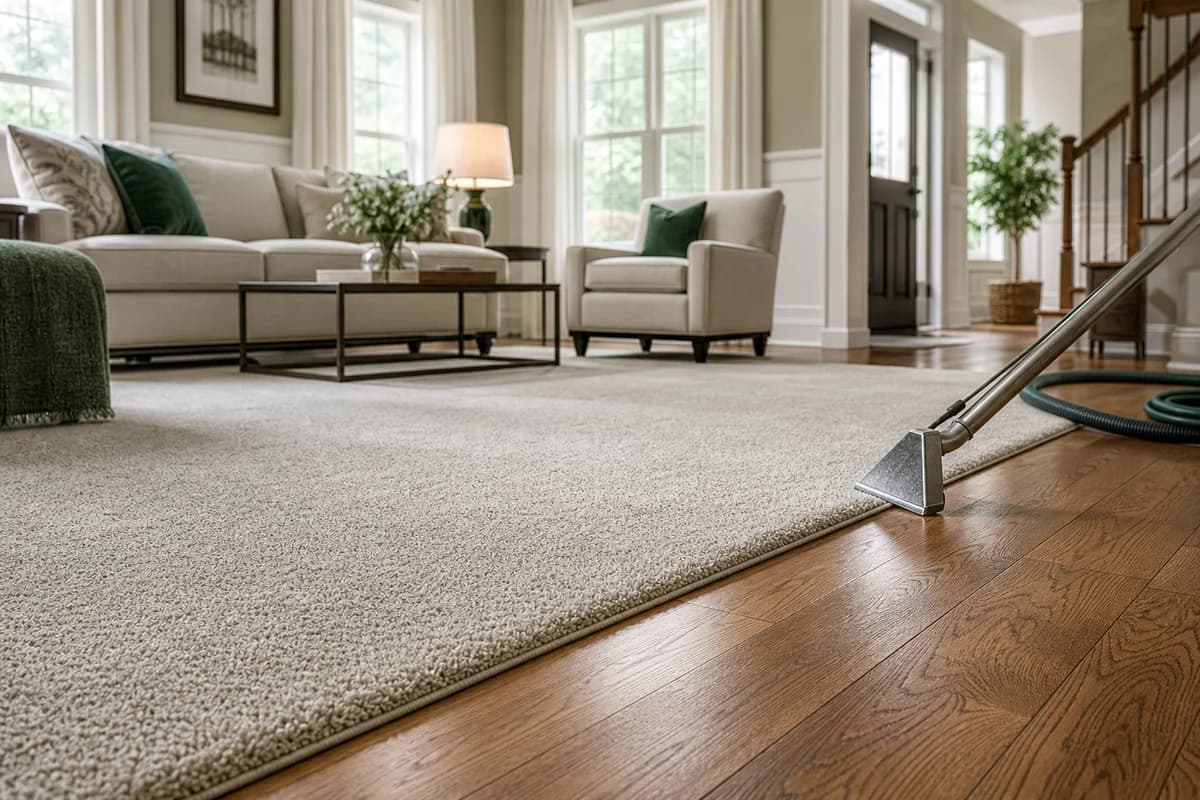
Do your floor and rug cleaning before the heat comes on, not after. Carpet and rugs dry fastest in the cool, drier air of fall, and once the furnace is running, air from every room moves through your ducts all day. Spend a good afternoon on the soft surfaces, check the filter, and set the humidity for your hardwood, and the house starts winter with less dust and fewer surprises.
Clean the soft surfaces first
Carpets, rugs, and upholstery collect a season's worth of dust, pollen, and tracked-in grit, and it's easier to remove before the house is closed up tight. Vacuum thoroughly before anyone arrives. A good pass removes the loose grit that would otherwise turn to mud when water hits it.
Plan the cleaning for a day when you can run fans and open a window or two. Carpet usually dries in 4 to 8 hours depending on fiber, humidity, and airflow, and how long carpet takes to dry explains what slows it down. Upholstery is generally usable in 4 to 6 hours, but check the cleaning code on the tag first, since some fabrics can't take water. Upholstery cleaning codes breaks those down. Before the crew arrives, vacuum the upholstery with an upholstery tool, paying attention to the seams and the gap where the cushions meet the frame, since crumbs and pet hair collect there.
Royal cleans rugs on-site, so a heavy rug doesn't have to be hauled to a plant and back. It gets cleaned right where it lives.
Fall is also a good time to look at what the carpets are telling you. Dark traffic lanes, a dull path from the back door, or a spot that smells after rain usually points to soil or moisture that a vacuum won't reach. Note those areas when you book, so the pre-treatment goes where it's needed. If you have a dog or cat that sheds heavily in autumn, brush your pet outdoors the day before the appointment, since loose hair tangles in the pile and slows the vacuum pass.
Rugs back down, the right way
Rugs that came up for summer need a little more attention than a quick roll-out. Work through these steps in order:
- Clean the rug before it goes back down. Grit trapped in the backing wears down the backing and the fibers above it.
- Let it dry completely on a clean, dry surface before it returns to the floor.
- Check the floor underneath each rug for dust lines, damp spots, or a musty smell. Dry or clean that area first.
- Use a rug pad sized to the rug. It cushions the rug and keeps it from sliding, and why rug pads matter covers the types.
Hardwood and the winter air
Maryland winters bring dry, heated air, and wood responds to dry air by shrinking. That's when seams open and boards can gap. You can't stop wood from moving, but you can keep the air in a steadier range, which slows the swings. Most wood flooring makers want indoor humidity somewhere around 30 to 50 percent, and your manufacturer's guide gives the exact target. Why hardwood gaps in Maryland winters covers what a gap is and what it isn't.
Watch for the opposite problem too. A floor that's cupped, with the edges of the boards higher than the middle, usually means it has been holding moisture, often from a humid stretch or a wet spill that never fully dried. Gaps and cupping both tell you the air or the floor needs attention, so a quick hygrometer reading shows you which way to go.
Skip steam on hardwood entirely. A barely damp microfiber cloth handles routine cleaning, and extra moisture is the last thing a floor needs going into a dry season.
The furnace filter
Find the filter, read the size printed on its frame, and compare it with the one you have. A clogged filter restricts airflow, so the system works harder and captures less dust. Replace it when it looks gray and dense, and check it monthly once the heat is running. Pets and dusty projects shorten the interval.
Write the install date on the filter frame with a marker. Filters are easy to forget, and a dated note takes the guesswork out of the next change.
Changing the filter doesn't clean the ducts. Air duct cleaning is outside what we offer, so call a duct specialist if the system needs a look.
Closing up for the season
- Book carpet, rug, and upholstery cleaning on a clear day, with enough time before the heat comes on for everything to dry.
- Check the furnace filter, replace it if it's gray and dense, and write the date on the frame so you know when to check next.
- Set a hygrometer in the main living area and check it weekly through the heating season.
- Empty and wipe the vacuum canister, and wash or replace its filter so it isn't spreading dust the next time you use it.
- Put a rug pad under each rug before it goes back down.
If time is short, book the cleaning and change the filter first. Those two make the biggest difference in the rooms you use most, and the rest can wait for a free afternoon.
When a professional cleaning makes sense
If your carpets are due, or the house has a season's worth of pet hair and dust, book the soft surfaces before the heat comes on. Royal Carpet Cleaners handles carpet, rugs, and upholstery right in your home, and you get an upfront quote before the appointment. Book at https://book.royalservicesmd.com or call (410) 569-2877.
Frequently asked questions
Can I walk on carpet while it's still drying?
Keep off it until it's dry, since walking on damp carpet can leave footprints and push soil into the backing. If you must cross it, wear clean socks or the booties the crew leaves, and keep it brief.
Should I run a humidifier in every room?
Usually not. A unit in the main living area or the room with the most hardwood does more good than one in every room, and a house that's too humid brings condensation and its own problems.
Does my house need its air ducts cleaned before winter?
Duct cleaning is a separate specialty, and Royal Carpet Cleaners doesn't offer it. If you see dust blowing from vents or a lot of dust settling right after cleaning, ask an HVAC contractor to inspect the system.

Written by
The Royal Carpet Cleaners Team
Royal Carpet Cleaners is a family-owned, IICRC-certified company based in Bel Air, Maryland. Our technicians clean carpet, rugs, upholstery, tile, and hardwood across Harford, Baltimore, Howard, and Cecil counties.