The cleaning code on an upholstery tag tells you which methods the maker considers safe for that fabric. W means water-based cleaners are the approved choice, S means solvent-based products only, W/S means either one works, and X means vacuuming and light brushing with no liquids at all. Treat the code as a conservative starting point, and test any cleaner on a hidden spot before it touches the visible fabric.
The four codes at a glance
| Code | What it allows | What to avoid |
|---|---|---|
| W | Water-based cleaning, applied lightly | Solvent-based products, which aren't the recommended choice |
| S | Solvent-based cleaning only | Water, which can leave rings, shrink the fabric, or bleed dye |
| W/S | Either water-based or solvent-based cleaning | Heavy application of either; keep moisture low |
| X | Vacuuming and light brushing | Any liquid, water or solvent |
Solvent products for upholstery usually come as dry-cleaning solvents or solvent-based upholstery cleaners. They handle oily soil that water struggles with, but many are flammable, and their vapors build up quickly in a closed room. Open a window, run a fan, and keep pilot lights and space heaters out of the area before you start.
Why the codes lean conservative
A manufacturer writes one code for an entire fabric line, and it has to hold for the most sensitive piece in that line and for owners who may clean with whatever is under the sink. So the code assumes a reasonable worst case. A fabric labeled S might handle a light water-based wipe without trouble, but if it rings, shrinks, or lets dye bleed, the owner lives with the result, and the maker can't predict that for every household. Think of the code as a floor, not a ceiling. A fabric is sometimes more forgiving than its tag suggests, but you only find out through a test.
A code also says nothing about whether a stain will come out. It tells you which liquids are safe to try. A W-coded sofa can still hold a set stain that needs a technician, because an approved method doesn't guarantee a clean result. Natural fibers are the clearest example of why the code matters, and linen and cotton upholstery care shows what goes wrong when they're over-wet.
Find the tag and read it correctly
Tags are usually sewn into a seam or stapled to the underside. Check under each seat cushion, on the back of loose cushions, under skirts, and along the inside back. A single piece can carry more than one code, since the seat fabric and the frame fabric are sometimes different materials. If there's no tag at all, assume the most cautious option: vacuum first, and test the gentlest method before anything wet touches the piece. Microfiber is a common case where the code really matters, and the microfiber couch guide shows how it plays out in practice.
How to test a code before you clean
- Pick the least visible spot, such as the underside of a seat cushion or the back of a skirt.
- For a W or W/S test, dampen a white cloth with your cleaning solution. Press it on the hidden spot, then blot with a second dry white cloth. If color lands on that second cloth, stop.
- For an S test, put a small amount of solvent product on a cotton swab and dab the hidden spot. Ventilate the room and keep flames and heaters well away.
- Let the test spot dry completely, which can take several hours. Rings, stiffness, and dulling usually show up only after drying.
- Only then start on the visible fabric. Work in small sections and use the least moisture that gets the job done.
Use a plain white cloth for every part of the test. Colored towels can shed their own dye, which can look like a failed test or hide a real transfer. A pass means no color on the cloth, no ring at the edge of the test spot, and no change in how the fabric feels or looks once it's dry. Any one of those is a reason to stop and try a gentler option, or to call a professional. Don't push a failed test to see if it improves, because repeated wetting usually spreads the problem instead of solving it.
What a technician checks beyond the tag
The code is the first clue, not the full picture. Fiber content matters, since a blend can behave differently from either of its parts. Backing and foam matter too, because a coating or a glued layer can react to water even when the face fabric looks fine. A technician can rub a hidden area with a white cloth to check dye fastness, and can spot old protectors or leftover residue that change how a fabric takes a new cleaning. Our fabric inspection is the first step of every upholstery job, and it reads the code alongside the fabric itself. We're an IICRC Certified Firm.
Age matters too. Years of sunlight, body oil, and past cleanings change how a fabric responds, and a finish that has worn thin can let water through faster than it did when the sofa was new. Treat an older piece the way you'd treat a new one: test first, and read the tag as a starting point rather than a promise.
When to bring in help
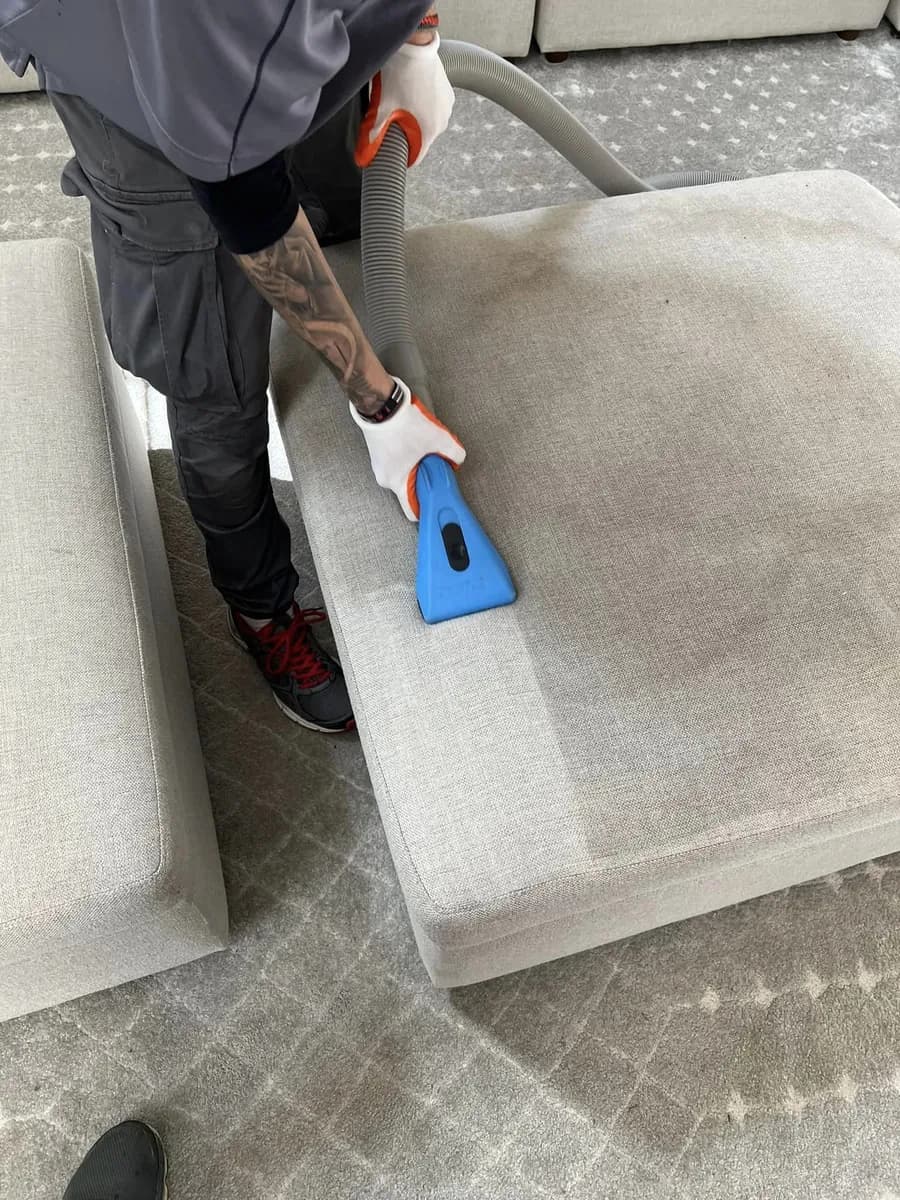
Call a pro when the code is X or S and the stain won't lift with vacuuming or a solvent test, when the tag is missing and you can't identify the fabric, or when an earlier cleaning left a ring you can't blend. At Royal Carpet Cleaners, upholstery cleaning happens in your home, and the method is chosen to fit the code and the fabric rather than applied as one general recipe. After the visit, upholstery is usually usable within 4 to 6 hours. Quotes are given upfront, and you can book online or read about our upholstery cleaning. If you're still choosing fabric, the durable fabric guide covers how codes factor into that decision.
Frequently asked questions
Can I ignore the code if the fabric feels sturdy?
Not safely. A tough-feeling fabric can still ring, shrink, or bleed dye when it gets wet, and the code reflects what the maker tested, not how the surface feels.
Does a solvent product make an S code safe to clean?
It's the right category, but it isn't a guarantee. Solvents still need a hidden-spot test and good ventilation, because some dyes and adhesives react to them too.
What if my upholstery has no code at all?
Treat it as unknown. Vacuum thoroughly, test the gentlest method on a hidden spot, and call a professional before using anything stronger.
Written by
The Royal Carpet Cleaners Team
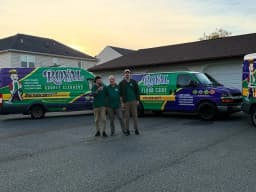
Royal Carpet Cleaners is a family-owned, IICRC-certified company based in Bel Air, Maryland. Our technicians clean carpet, rugs, upholstery, tile, and hardwood across Harford, Baltimore, Howard, and Cecil counties.