A hardwood floor needs refinishing when the wood itself is exposed, stained, or damaged, not just when the finish looks tired. Most of the signs show up in the finish first: traffic lanes that have worn through, a grayish cast, or water that soaks in instead of beading. Learn these seven, and you'll be able to tell a cleaning problem from a screen-and-recoat job or a full refinish.
Signs you can see in the finish
1. The finish is worn through in traffic lanes
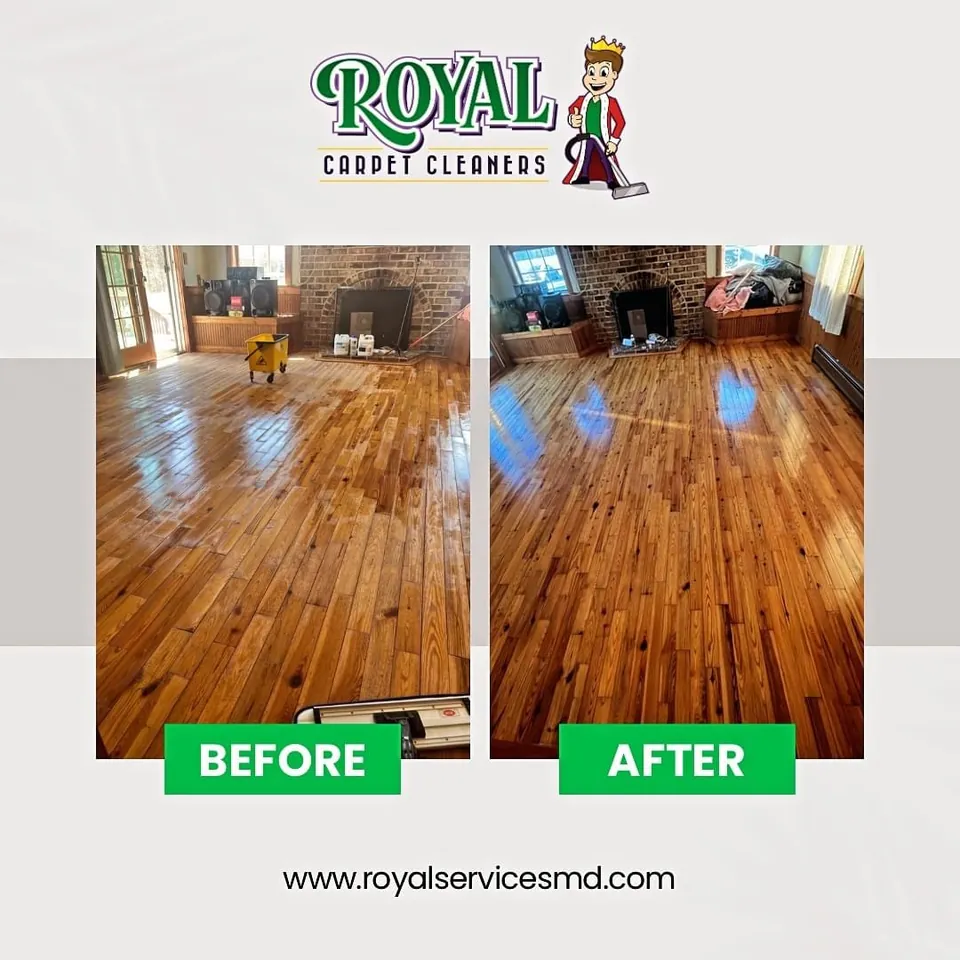
Look at the path from the front door to the kitchen, the spot in front of the sink, and the place where chairs get pulled out. If the wood there looks lighter, flat, or bare, the finish is gone and the wood is taking dirt and moisture every day. Bare wood darkens and roughens over time, so these spots tend to get worse once they start. No amount of cleaning will bring back what the finish used to do.
2. The wood looks gray or silvery
Wood that has sat under sunlight and foot traffic for years can weather to a gray or silvery tone, especially near windows and in the middle of a room. That color comes from the wood itself, not from dirt. Cleaning won't lift it, and a screen and recoat won't reach it either, because the weathered surface has to be sanded back to fresh wood before a new finish can bond and look right.
3. Water soaks in instead of beading up
Put a few drops of water on the worn areas. If they bead up and sit there, the finish is still sealing. If the water soaks in quickly and leaves a dark spot, the finish has been breached there, and the wood is taking on moisture. One open spot can sometimes be repaired on its own, but several open spots across a room usually point to refinishing. If you're not sure, test five or six spots across the room before deciding.
4. The finish peels, flakes, or lifts
A finish that peels in sheets or flakes at the board edges has lost its bond to the wood or to the coat beneath it. New coats laid over failing film tend to fail the same way, so the old finish has to come off. This can happen after many rounds of recoating, or after water has gotten under the film. Refinishing is the usual fix, because the failed layers have to be removed completely.
Signs in the wood itself
5. Deep scratches that catch a fingernail
Run a fingernail across a scratch. If it glides over, the damage is in the finish, which is usually fixable with a screen and recoat. If the nail catches or drops into a groove, the scratch has reached the wood. That needs sanding or a spot repair, and a deep gouge can mean a board needs to be replaced.
6. Dark stains or discoloration that won't clean up
Dark spots from standing water, pet urine, or uneven sun exposure often sit in the wood rather than on the surface. Cleaning can't reach them, and a new coat over a stain only seals it under the finish. Sanding removes the discolored wood, which is usually the only way to get an even color back. Old urine stains that soaked deep may not come out fully even after sanding, so read about pet urine on hardwood floors before you commit.
Cupping and crowning: the limit
7. Cupping or crowning that has settled
Boards that have cupped (edges higher than the center) or crowned (center higher than the edges) can sometimes be sanded flat, but only once the moisture problem is fixed and the boards are stable. Sanding a floor while it's still swollen can lead to crowning once it dries, and severe cupping can mean the boards are too thin to sand safely or that moisture is still getting in. Mild, stable cupping is a refinishing candidate. Severe or changing cupping needs a pro to decide whether sanding is safe at all.
A quick check you can do this weekend
Use a sunny afternoon, or a lamp held low, to walk the floor slowly. Low light shows dull areas, scratches, and worn spots that disappear under ceiling lights.
- Run the water test in at least five spots: a traffic lane, the sink area, a board near a window, a board edge, and a spot near a corner.
- Run your fingernail across any scratch you find, and note whether it catches.
- Look at the edges of boards in doorways for gray or dark wood.
- Sketch the room and mark the spots, so you can compare them after a few weeks.
Then match what you found to the likely next step:
| What you found | What it usually points to |
|---|---|
| Worn-through traffic lane | Refinishing |
| Dull or scuffed, but the finish covers everything | Screen and recoat |
| Water soaks in at several spots | Refinishing |
| Finish peeling or flaking | Refinishing |
| Scratch that catches a fingernail | Spot repair or refinishing |
| Mild, stable cupping | Sanding after moisture is fixed |
When refinishing is the wrong answer
Not every sign calls for a full refinish. Haze and sticky film often come from wax buildup, and removing that can bring back the shine. Light dullness on a sound finish usually responds to a screen and recoat, as screen and recoat vs. full refinishing explains. A single damaged board can often be replaced or repaired. Refinishing is for floors where the finish or the wood is gone, not floors that just look tired.
When to call a pro
If you're seeing several of these signs in more than one room, a pro should look at the floor. Royal Carpet Cleaners offers clean and buff, wax removal, sandless screen and recoat, and dustless refinishing for hardwood, and a technician needs to see the floor in person before giving an exact quote. The wood's thickness, its moisture, and the finish type all change the answer, and those are easiest to judge on the spot. Learn more on the hardwood floor cleaning page, or book online when you're ready.
Frequently asked questions
Is it ever too late to refinish a floor?
Yes. If sanding would take the wood below a safe thickness, or the boards have failed from rot or severe moisture damage, replacing boards is the better answer. A pro can check what's left before anyone starts sanding.
Can refinishing remove water stains?
Often, when the stain sits in the finish or the top layer of wood. Deep black stains may need the wood sanded further or a spot repair, and some won't come out completely.
Should I refinish a floor myself?
You can rent a sander, but it takes skill to avoid gouges and uneven edges, and without dust containment the dust goes everywhere. Hardwood mistakes are hard to undo, so many homeowners hire a pro for this job.

Written by
The Royal Carpet Cleaners Team
Royal Carpet Cleaners is a family-owned, IICRC-certified company based in Bel Air, Maryland. Our technicians clean carpet, rugs, upholstery, tile, and hardwood across Harford, Baltimore, Howard, and Cecil counties.