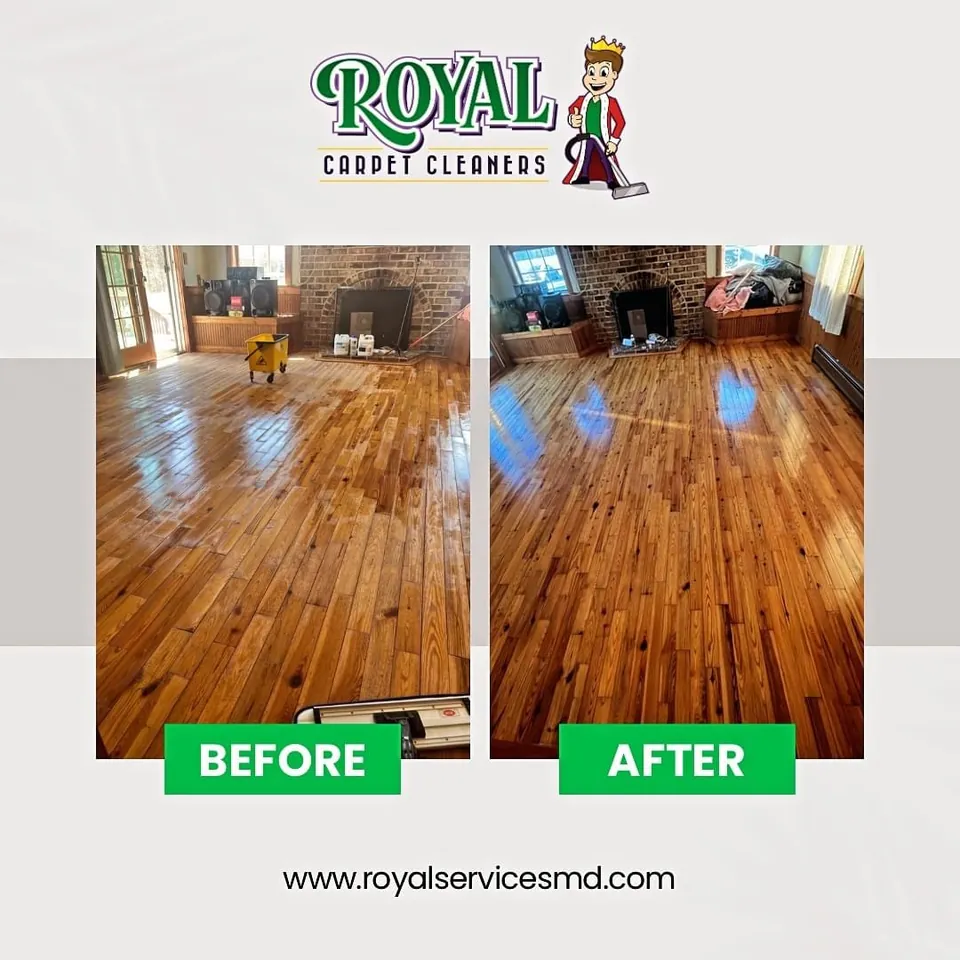
Screen and recoat and full refinishing both bring a tired floor back, but they fix different levels of damage. A screen and recoat scuffs the existing finish so a fresh coat can bond, which works when the wood underneath is still sound. Refinishing removes the old finish and a thin layer of wood, which is the only way to change the color or get rid of deep marks.
Two processes, two depths
A sandless screen and recoat uses a floor buffer fitted with abrasive screen pads. The pads scuff the top of the existing finish so the new coat has something to grip. After the dust is cleaned up, one or more coats go on, and the floor looks renewed without losing any wood. The process doesn't change the color, and it can't reach scratches that have cut into the wood.
A typical screen and recoat starts with a thorough cleaning to remove wax residue, grit, and anything else that would block the new coat. The buffer then scuffs the finish, the dust is vacuumed and wiped, and thin coats go on with drying time between them. Most failures trace back to a few predictable mistakes: skipping the wax check, recoating over a peeling finish, applying coats too thick, and walking on the floor before it's ready.
Refinishing sands through the finish and into the wood until the surface is bare and even. The old film, the marks, and a little of the wood come off together, which is why a floor can only take so many refinishes over its life. After sanding, the floor can be stained to a new shade and sealed with finish coats. Done well, the result looks like a new floor, but it takes more labor and more days, and it needs careful dust control.
Start with how deep the damage goes
Walk the floor in good light and look at three zones: the path from the front door, the area in front of the sink or stove, and the spot where chairs get pulled out. Those are usually the first places the finish wears through.
- If the finish is dull or lightly scuffed but still covers the wood everywhere, a screen and recoat is a good candidate.
- If you can see bare or gray wood in those zones, the finish is gone there, and refinishing is the safer call.
- Run a fingernail across any scratch. A mark that glides under the nail is in the finish. A mark that catches the nail has cut into the wood, and recoating won't fill it.
Run the water and wax checks
The water test shows how well the finish still seals. Put a few drops from an eyedropper onto several spots, including a worn traffic lane, a board edge, and a spot near a corner. Water that beads up and stays round means the finish is still sealing, and the floor is a likely screen-and-recoat candidate. Water that sinks in within a few minutes and darkens the wood means that spot is open. Results in between are where judgment comes in. Test more spots, and if they disagree, get a pro to look before you choose.
Then check for wax. Dampen a white rag with mineral spirits and rub a small patch in a hidden spot, such as a closet floor. A dark, gray, or yellowish film on the rag means wax or polish is on the floor. A new coat won't bond well over wax, so the wax has to come off first. Mineral spirits are flammable, so work with the windows open and no flames nearby. Lay the rag flat outdoors to dry, or seal it in a metal container until you can dispose of it, since solvent rags can be a fire hazard as they dry.
Compare the two side by side
| Factor | Screen and recoat | Full refinishing |
|---|---|---|
| What it does | Scuffs the existing finish so a new coat bonds | Removes the old finish and some wood, then refinishes |
| Dull or scuffed finish | Fixed | Fixed |
| Deep scratches or gouges | Not fixed | Fixed, if the wood is thick enough to sand past them |
| Wood color | Unchanged | Can be changed with stain |
| Wood removed | None | A thin layer each time, so refinishes are limited |
| Relative expense and time | Less expensive and quicker | More expensive and takes more days |
| Dust | Low | Low with dustless methods, but not zero |
When refinishing is the right call
Refinishing is the answer when you want a new color, when worn traffic lanes have gone down to bare wood, when dark stains won't lift, or when deep scratches reach the wood. It's also the usual fix when the finish is peeling or flaking, since failing film has to come off before anything new will stick. For the warning signs in more detail, read 7 signs your hardwood floors need refinishing.
Where wax and oil change the plan
Wax buildup on a film finish is a separate problem with its own fix, and it has to come off before a screen and recoat will bond. The guide to removing wax and polish buildup walks through the steps. Oil-finished floors don't follow the same path, because they're maintained with penetrating oil rather than a surface film. If you aren't sure which finish you have, polyurethane vs. oil-finished hardwood shows how to tell.
Choosing with a pro
Both services start with a look at the floor, and the right answer often depends on details you can't judge from the surface, like wood thickness, the finish type, and whether wax is present. Royal Carpet Cleaners checks hardwood in person before giving an exact quote, and a technician can walk you through both options side by side for your floor. You can start on the hardwood floor cleaning page or book online.
Frequently asked questions
Can a screen and recoat fix deep scratches?
Usually not. It can soften light scratches in the finish, but a mark that catches a fingernail has cut into the wood, and that needs spot repair or refinishing.
Can a floor be screened and recoated more than once?
Yes, as long as the finish is still bonded and the wood isn't showing. Each round removes only a little finish, but there's a limit, and failing or overly thick coats point toward refinishing.
How long is a room out of use for each service?
Both services keep the room out of use for at least a day or two, and refinishing usually takes longer. Full hardening takes longer than either, so ask for a written timeline before you book.

Written by
The Royal Carpet Cleaners Team
Royal Carpet Cleaners is a family-owned, IICRC-certified company based in Bel Air, Maryland. Our technicians clean carpet, rugs, upholstery, tile, and hardwood across Harford, Baltimore, Howard, and Cecil counties.