Clean a microfiber couch by dampening the cloth, not the sofa, with a mild soap solution, then blotting each spot from the outside in. Before any liquid goes on, check the cleaning code on the tag, because microfiber ranges from water-friendly to solvent-only, and test a hidden spot first. Most of the trouble with microfiber comes from too much moisture and too much rubbing, not from the cleaner itself.
What microfiber is and how it behaves
Microfiber upholstery is usually polyester, often made from split fibers so fine that the surface feels soft and suede-like. Polyester doesn't absorb much water, so a water-based spill tends to sit on top long enough to lift with a blot if you act fast. The trade-off is that polyester attracts oily soil. Body oils, cooking grease, and lotion bond to the fibers and then collect dust, which is why microfiber often looks dingy on the armrests and the front edge of the seat.
The fibers also lie in a short nap with a direction, the same way suede does. That nap is what makes the color look even, and it's what gets flattened when the same spot is rubbed over and over.
Denim and other dye transfer
Blue jeans are the classic culprit. Denim sheds loose indigo, and that dye can rub onto light microfiber, especially when the fabric is damp from a spill or a humid day. It shows up as a blue cast or streak that plain water won't wipe away. Acting while the transfer is still fresh gives you the best chance, and a set transfer is a job for a professional.
Check the tag before you wet anything
The code tells you which cleaning methods the maker considers safe. Many microfiber couches carry a W or W/S code, meaning water-based cleaning is acceptable. Some carry an S code, often because the backing or the finish doesn't tolerate water well, and those should only get a solvent product in a room with good airflow. If the tag is missing or unreadable, don't guess. Test a hidden spot and consider calling a pro. For the full breakdown of each code, read the cleaning codes guide.
Cleaning a spill on a W-coded microfiber couch
- Vacuum the area with a soft upholstery brush first. Grit that gets wet turns into a paste that scratches the fibers as you work.
- Mix about 1/4 teaspoon of clear dish soap into a cup of lukewarm water. Dip a white microfiber cloth and wring it until it's just damp.
- Test a hidden spot. Press the damp cloth on it, blot with a dry white towel, and check the towel for color. Let the spot dry fully before you judge the result.
- Blot the stain starting at its outer edge and working toward the center. Switch to a clean section of cloth whenever the one in your hand picks up color.
- Rinse by blotting with a cloth dampened in plain lukewarm water. Soap left behind attracts dirt and can dry into a dull ring.
- Press the area with a dry towel, then run a fan across it. Expect a few hours before the fabric is fully dry.
Watermarks and how to prevent them
Watermarks are tide lines, and they form the same way water rings form on any fabric. The wet area dries from its edges inward, and whatever was dissolved in the liquid gets left behind at the boundary. Dark microfiber shows these lines far more clearly than light. Prevention is mostly restraint: use less liquid, and run a fan across the area so it dries evenly. If a line has already formed, dampen the whole cushion or seat panel lightly with plain water so the edge fades into the rest of the fabric, then dry it. The full story is in why water rings form on upholstery.
Rubbing alcohol is a narrow tool
Rubbing alcohol, usually 70 percent isopropyl, can lift some oil-based marks and certain inks from polyester, which is why it turns up in so many DIY guides. Use it only on a small spot. Dampen a cotton swab, test a hidden area first, and keep the room ventilated, since the vapor irritates and the liquid is flammable. Dab from the outside in, don't saturate the fabric, and stop if color comes onto the swab or the finish looks dull and stiff afterward. Acetone and nail polish remover are harsher still and can strip finishes, so keep them off microfiber.
What not to do
- Don't rub or scrub. Friction burnishes microfiber and drives the stain deeper into the weave.
- Don't reach for bleach. Chlorine bleach can strip the dye, and it does nothing useful for oily soil.
- Don't use hydrogen peroxide or oxygen bleach on dyed microfiber without testing, since they can lighten the color.
- Don't soak the cushions. Water trapped in the foam dries slowly and can start to smell musty.
- Don't use hot water or steam on protein stains like blood, milk, or egg, because the heat sets them.
Bring back the nap
Once the fabric is completely dry, brush it gently with a soft-bristle brush in the direction the nap lies. That evens out the surface and lifts fibers that a spill or a rub has flattened. A shiny patch from years of friction usually won't reverse at home, so brushing can only do so much.
For routine care, a dry microfiber cloth wiped along the nap every week or two lifts the dust that dulls the surface. Skip furniture polish. Polish leaves a film that attracts more dust and makes the fabric look greasy, and microfiber doesn't need it to look its best.
Knowing when to hand it off
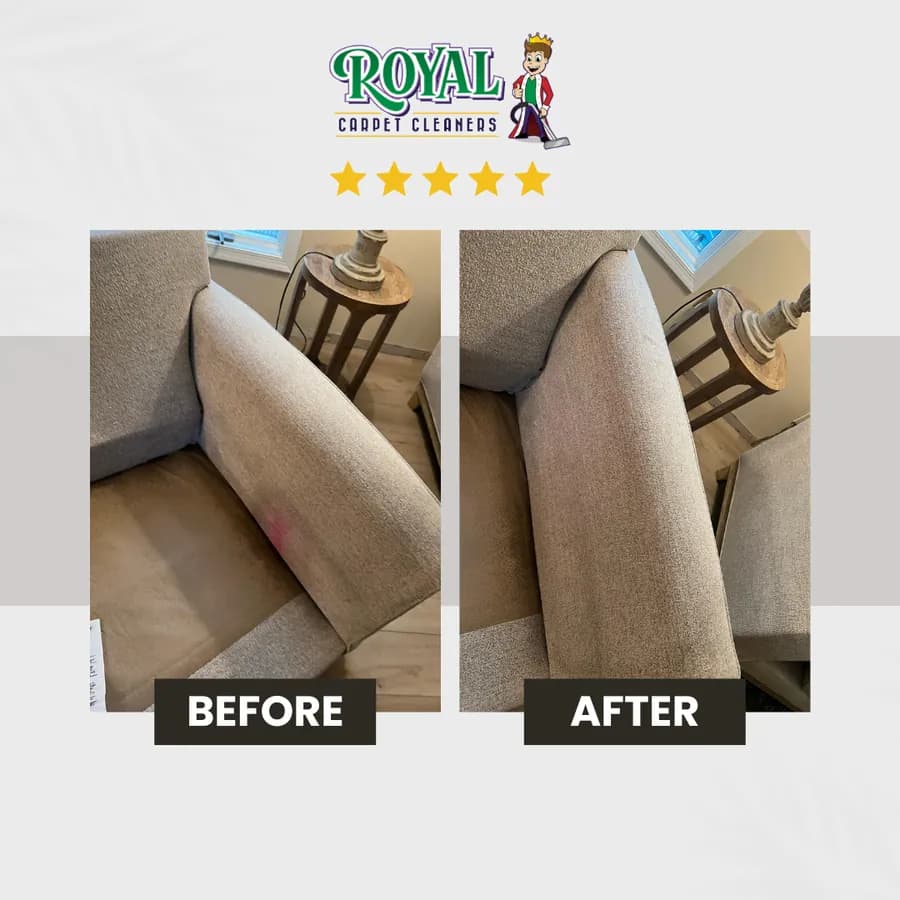
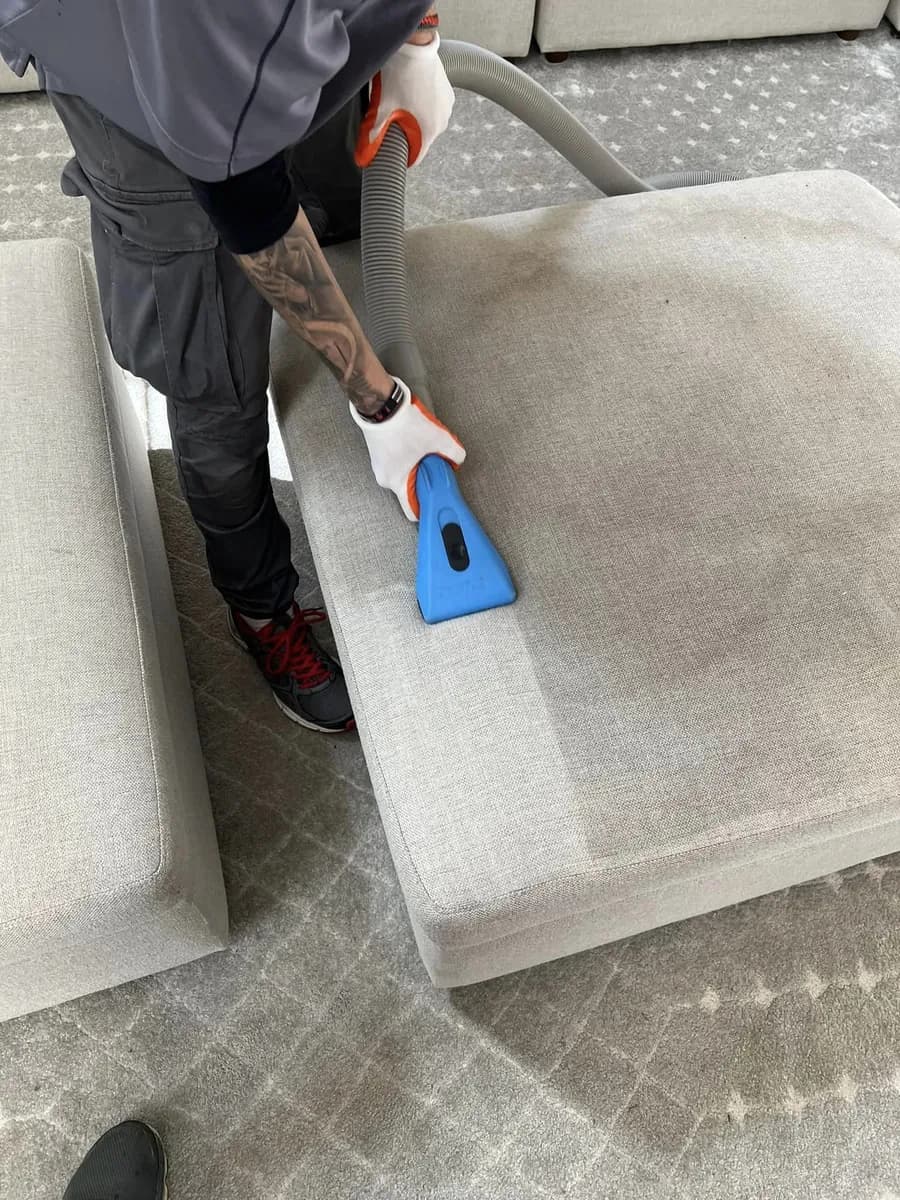
If the tag says S, if a stain has been sitting for weeks, or if the couch still smells after careful cleaning, a professional is the safer bet. Royal Carpet Cleaners handles upholstery in your home, moving through pre-vacuuming, pre-treatment, hot water extraction, and deodorizing, with an optional fabric protector at the end. The piece is usually usable again within 4 to 6 hours. You can book online or read more about our upholstery cleaning first.
Frequently asked questions
Is it safe to use hot water on a microfiber couch?
The polyester itself handles warm water well, so the fabric isn't the issue. Stick with lukewarm water anyway, because heat sets protein stains like blood, milk, and egg.
Why does one section of my microfiber couch look shiny?
Repeated friction and body oil flatten the fibers so they reflect light differently, an effect called burnishing. Brushing softens the look, but a shine that built up over years may need a professional's attention.
Can I machine wash the cushion covers?
Only if the tag says machine washable. Many couch covers are sewn on or fit a frame tightly, so check the construction before you try anything.

Written by
The Royal Carpet Cleaners Team
Royal Carpet Cleaners is a family-owned, IICRC-certified company based in Bel Air, Maryland. Our technicians clean carpet, rugs, upholstery, tile, and hardwood across Harford, Baltimore, Howard, and Cecil counties.