Linen and cotton upholstery shrink, brown, and fade faster than synthetics when they're over-wet or over-heated, so the way you clean them matters more than which cleaner you pick. Keep moisture low, keep the water cool, and dry the fabric quickly with air movement rather than heat. Those three habits prevent most of the trouble.
Why cotton and linen shrink
Both fibers are cellulose, which absorbs water and swells. As the fabric dries, the fibers relax and then contract, and heat or tumbling pulls them tighter still. On fabric that hasn't been pre-shrunk, most of the shrinkage happens the first time it gets soaked. Upholstery covers are usually woven fairly tight, so the stress shows up as puckering at the seams, a zipper that suddenly won't close, or a cover that won't go back on the cushion.
Before you plan anything, confirm the fiber. A lot of linen-look upholstery is actually polyester or a poly-blend with a slubby texture, and those tolerate water and heat far better than true linen. The advice here is written for real cotton and linen. The label or the seller's spec sheet will tell you more than the look does.
Where the brown comes from
Brown on natural fabric usually has a few sources, and each calls for a different response.
- Migration. When a cushion gets soaked, dissolved soil moves outward with the water. As it dries, the residue collects at the edge and forms a tan or brown ring. It's the same mechanism behind water rings on upholstery.
- Heat and sun. Cellulose yellows and can scorch under high heat, whether from a dryer, an iron on high, or prolonged direct sun.
- Tannins and mildew. Coffee, tea, and red wine leave tannins that darken as they dry. Damp, poorly ventilated linen can also grow mildew, which often looks brownish or gray.
- Rust. Iron in hard water, or a rusting staple or tack under the fabric, can leave a rust-colored stain that spreads with moisture. Soap won't touch it, and treating rust is a job for a professional rather than a home kit.
Removable covers: wash with restraint
If the sofa or chair has a removable cover, the care label is your guide. If the label is missing or unclear, treat the cover as the most delicate option and test before you wash anything. When the label does allow washing:
- If the label says dry clean only, don't wash the cover at home.
- Take the cover off, empty the pockets, close the zippers, and turn it inside out.
- Wash on the gentlest cycle in cool or lukewarm water, using a mild detergent and no bleach.
- Skip the dryer if you can. If the label allows low heat, take the cover out while it's still slightly damp.
- Air dry it flat or on a rack, and let it dry all the way through before it goes back on the cushion. A damp cover traps moisture against the foam, and that's where mildew starts.
Drying in humid weather
Maryland's humid summers slow drying. A cover can feel dry on the outside and still be damp at the seams and deep in the batting. Give it a full day or longer with a fan running, and check the seams and the thickest part of the cover with the back of your hand before it goes back on the cushion.
Spot care that doesn't soak the fabric
For everyday marks, use cool water and as little soap as possible. Check the tag first, and see the cleaning codes guide if you're unsure what it means. Mix about 1/8 teaspoon of clear dish soap into a cup of cool water, dampen a white cloth rather than the fabric, and blot from the outside of the mark toward the center. Rinse by blotting with plain water, then press dry with a towel and let a fan move air across the area. Test a hidden spot first, since natural dyes can release color even when the fabric itself handles water well.
Tannin stains need extra caution on linen. Coffee, tea, and wine can set into the weave if they dry before you reach them, and a spill that has sat for hours often needs a technician's approach. Resist the urge to soak the spot repeatedly at home, since each wet pass can move the tannin outward and make the mark bigger.
What not to do
- Don't use chlorine bleach. It weakens cellulose and turns it yellow over time.
- Don't use hydrogen peroxide or oxygen bleach on colored linen until a hidden spot proves the dye holds.
- Don't put hot water or steam on food or body stains. Heat sets protein stains.
- Don't iron damp linen on high to flatten a ring. Heat can scorch the fabric and lock in the brown.
- Don't wring or twist the fabric. Twisting distorts the weave and can stretch the seams.
- Don't leave a wet cover balled up in the washer or a basket. Damp cotton and linen develop musty smells and browning quickly.
Keep it looking good
Rotate cushions regularly so wear and fading spread evenly. Keep linen out of direct sun for long stretches, since UV fades dyes and gradually yellows natural fibers. Vacuum with a soft brush attachment, not a hard nozzle, because trapped grit abrades natural fibers a little more with every pass. A professional can also apply a fabric protector. It helps liquids bead, but it won't make linen waterproof.
If a cover looks fine but smells musty after washing or spot cleaning, the moisture is probably in the cushion beneath it rather than in the fabric. Pull the cushion, let it air in a dry room, and check the foam before you blame the cover.
When to hand it to a technician
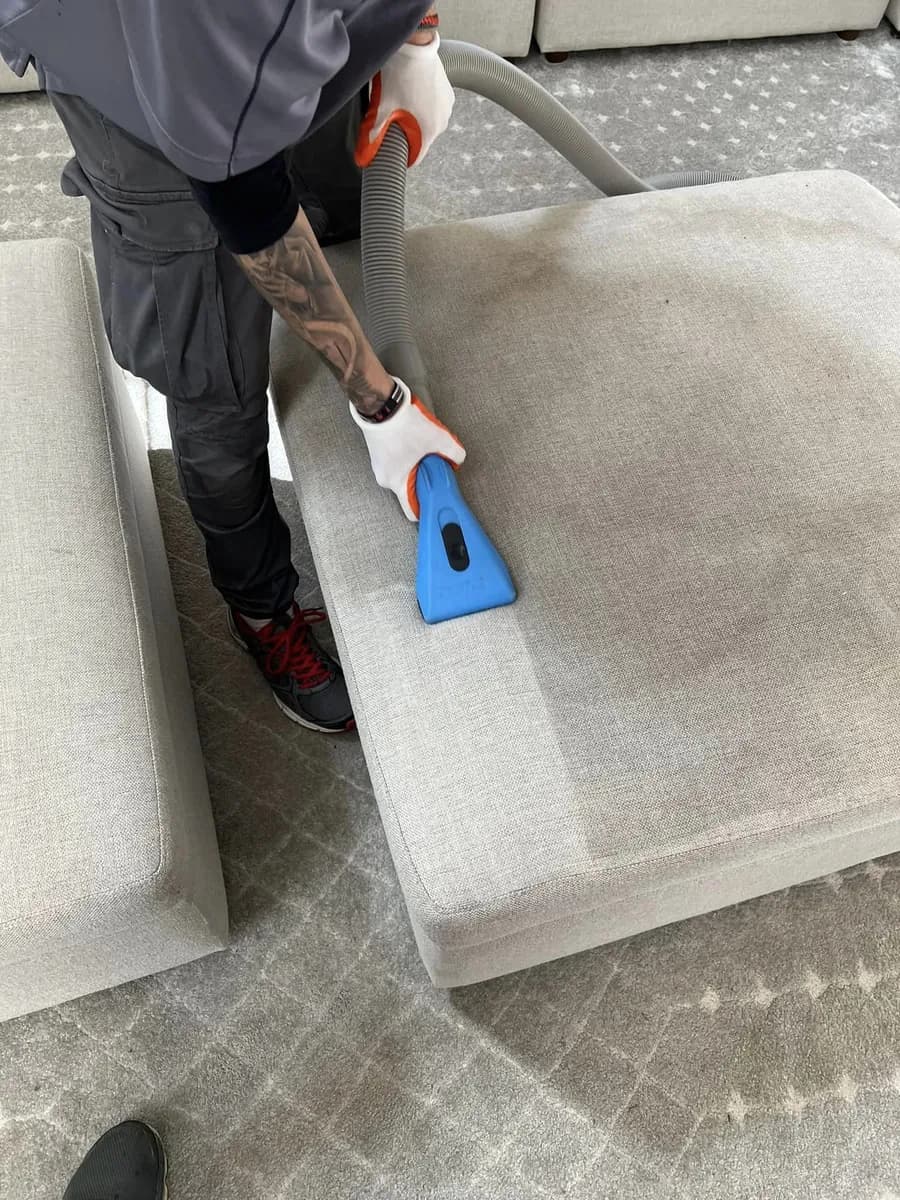
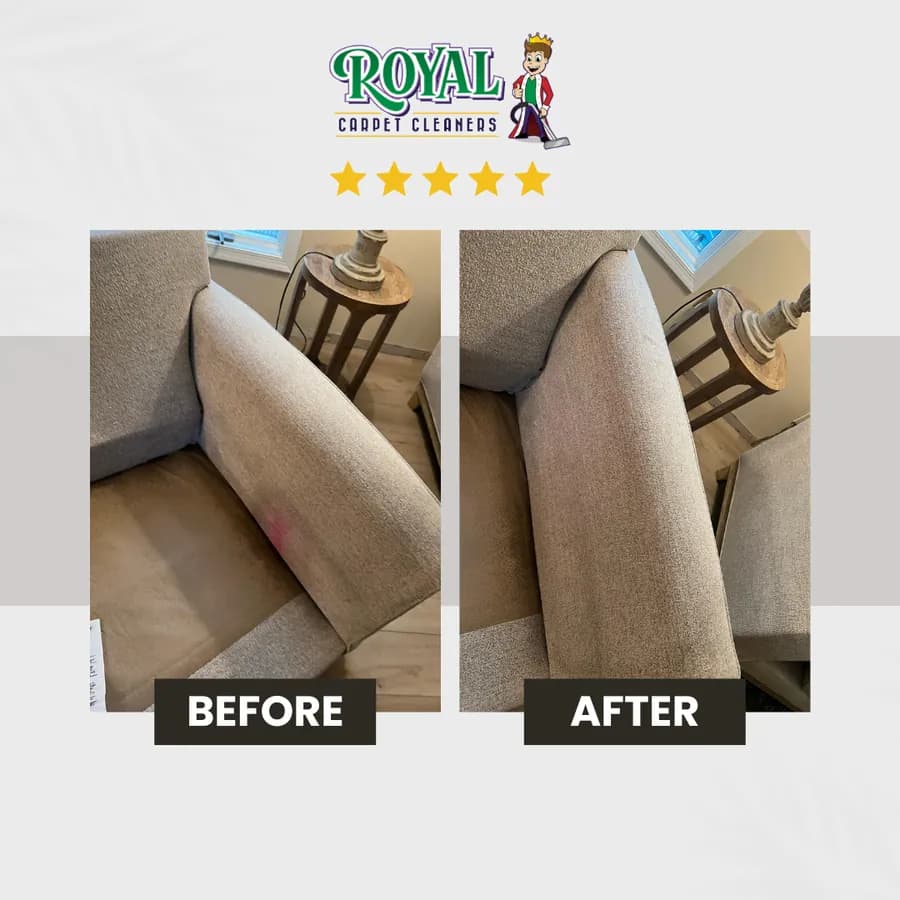
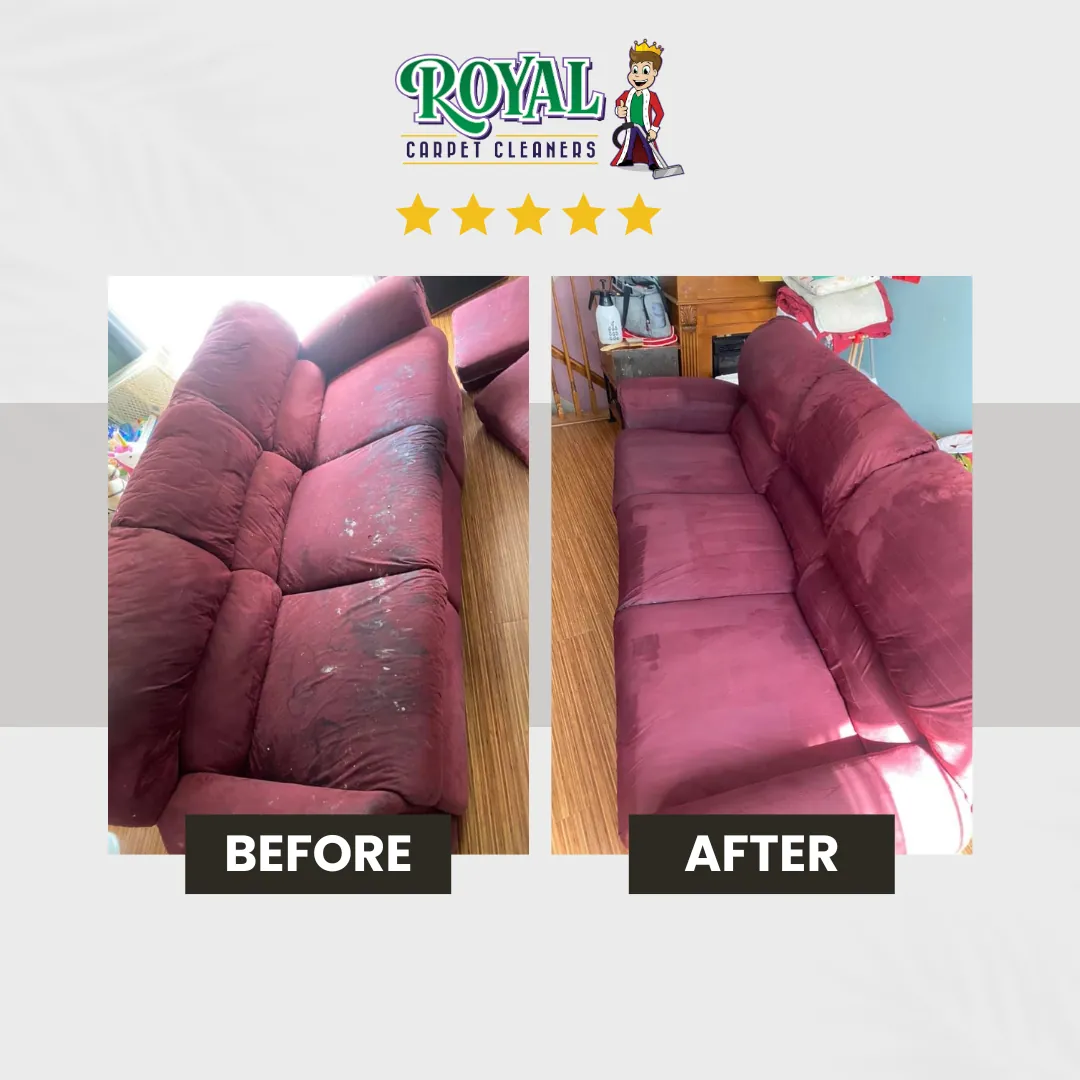
Call a professional when the cover can't be removed, when the fabric is delicate or the dye is unknown, or when a brown mark has soaked into the cushion. Royal Carpet Cleaners does upholstery cleaning in your home, so the piece doesn't need to leave the room. Natural fibers get the fabric inspection before any work starts, and the process includes pre-vacuuming, pre-treatment, hot water extraction, and deodorizing. If the inspection shows the fabric can't take a standard visit's heat and moisture, that's worth knowing before work begins. You can learn about upholstery cleaning or pick a fabric that holds up for your next purchase.
Frequently asked questions
Will a shrunken cover stretch back?
Not reliably. Shrinkage in cotton and linen is usually permanent, and pulling a damp cover into shape can distort its seams and weave.
Can I use oxygen bleach on white linen?
Skip chlorine bleach entirely. Oxygen-based products are gentler, but they can still weaken or spot natural fibers if they're too strong, so test a hidden corner and follow the label.
Does natural fabric always need a professional?
Not for everyday marks. Light spot care with cool water works, but deep soil and large stains are better handled by a technician who can test and control the moisture.

Written by
The Royal Carpet Cleaners Team
Royal Carpet Cleaners is a family-owned, IICRC-certified company based in Bel Air, Maryland. Our technicians clean carpet, rugs, upholstery, tile, and hardwood across Harford, Baltimore, Howard, and Cecil counties.