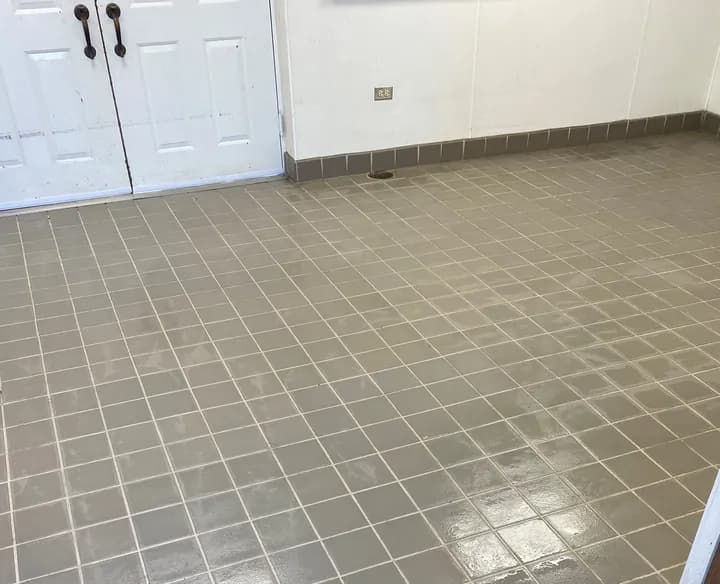
Mildew in shower grout is usually surface growth, and a careful clean plus steady ventilation handles most of it. It feeds on moisture, soap residue, and warmth, so the fastest fix is making the shower dry out after you use it. Deep or recurring growth is a different problem, because it means moisture is getting somewhere it shouldn't, and that calls for a specialist rather than another round of scrubbing.
Surface mildew vs. deep growth
Surface mildew looks like fuzzy or spotty gray, green, or black growth sitting on top of the grout. It usually wipes away with the right cleaner, and the lines stay clean for a while afterward.
Deep growth looks different. The staining tends to be darker and more even, it returns within days of cleaning, and it may show up in cracks, along caulk lines, or on the drywall above the tile. A musty smell that lingers after you've scrubbed is another warning sign. When the growth goes deeper than the grout surface, or the same spot keeps coming back, the moisture source often sits behind the wall or under the tile, where scrubbing can't reach it. Royal Carpet Cleaners doesn't do mold remediation, so a specialist should diagnose and treat that kind of growth.
Ventilation is the real fix
A hot shower is basically a steam generator. Most shower mildew is a drying problem, so the most effective habit is clearing the humidity:
- Run the exhaust fan during the shower and for about 20 minutes afterward.
- Confirm the fan vents outdoors. A fan that dumps humid air into the attic can cause problems up there.
- Squeegee the walls, the glass, and the floor after the last rinse. Water left on those surfaces is what keeps mildew going.
- Hang bath mats over a rail so they dry fully instead of sitting wet on the floor.
- If you have no working fan, leave the door or a window open during and after showers.
Maryland summers add humidity to the mix, and a closed bathroom can stay damp for hours on a muggy day. Run the fan a little longer in summer, and dry the tub surround in the evening if you shower after dark.
Caulk vs. grout
Many people call every dark line in the shower "grout," but the joint where the tub meets the wall is usually caulk. Caulk is a flexible sealant used where two materials move independently, such as the tub edge and inside corners. Grout is rigid, so it cracks if it's asked to flex.
That difference matters for two reasons. Caulk is the joint most likely to turn black first, because it moves and traps water at the edge. And you shouldn't grout a tub joint to fix it, because grout there will crack again.
To replace old caulk, cut out the old bead, clean the joint, let it dry completely, and apply a mildew-resistant silicone caulk in one smooth bead. Let it cure as long as the label says before you shower. If the caulk is only discolored, cleaning may be enough. Once it's cracked or peeling, replacement is the better option.
Clean mildew without creating fumes
These are the options that work on most shower tile and cement grout.
| Option | Works best on | Watch out for |
|---|---|---|
| 3% hydrogen peroxide | Surface mildew on grout and tile | Can lighten colored grout; test first; never mix with vinegar |
| Diluted bleach, about 1 part to 10 parts water | Stubborn mildew on cement grout and glazed tile | Lightens colored grout; ventilate; never mix with anything |
| Enzyme cleaner | Soap scum and organic residue | Doesn't kill mildew on its own; follow the label |
| White vinegar | Hard-water spots on glazed tile | Acid dulls cement grout and etches natural stone |
Here's the cleaning sequence:
- Open a window or run the fan, and wear gloves and eye protection.
- Test your product on a hidden grout line and wait a few minutes.
- Apply it to the mildew and keep the area wet for the full dwell time. Peroxide needs 10 to 15 minutes, and bleach needs about five to ten.
- Scrub the lines with a stiff nylon brush, working along the grout rather than across it.
- Rinse thoroughly with clean water, then dry the area with a towel.
- Repeat once if spots remain. If they don't lift after two rounds, stop. The growth may be deeper than the surface.
What never to mix
Mildew cleaning tempts people to combine products, and some combinations are hazardous:
- Bleach and ammonia produce chloramine vapors, which irritate the lungs and eyes.
- Bleach and vinegar, or bleach and any other acid, release chlorine gas.
- Vinegar and hydrogen peroxide form peracetic acid, which is corrosive and irritating.
- Steel wool and wire brushes scratch the glaze and can leave metal particles that rust.
Rinse out a spray bottle before you reuse it for a different product, and never store mixed cleaners.
When to call a professional
Surface mildew you can clean is a reasonable DIY job. Growth that comes back within days, shows up behind the tile, or appears with a persistent musty smell is not. A professional tile cleaning can lift surface mildew along with the soil that feeds it, using pre-treatment and high-pressure truck-mounted extraction, followed by a neutralizing rinse so no residue is left behind. For growth inside walls or ceilings, or for water getting through the shower, a mold remediation or water damage specialist should be the first call.
If the problem is limited to the surface and you want a clean starting point, our tile and grout cleaning service is a reasonable next step. The fan and squeegee habits do most of the work between visits, and they're worth keeping even after a professional reset. For a closer look at grout that has gone dark, Why Does Grout Turn Black? covers the other causes, and Grout Sealing: How Often and Which Sealer? explains how sealing can slow water absorption. You can book online at https://book.royalservicesmd.com.
Frequently asked questions
Can I use bleach on shower grout every week?
Not as a routine. Frequent bleach use can lighten colored grout and adds fumes to a closed room. Save it for stubborn growth, dilute it to about one part bleach to ten parts water, and rinse thoroughly afterward.
When does mildew mean I need a specialist?
Surface mildew on grout is a cleaning and ventilation problem. Call a specialist if you see staining on drywall or the ceiling, a musty smell that lingers after cleaning, or growth that returns within days, since those point to moisture behind the wall.
Why does mildew keep coming back in the same corner?
Corners and the seam where the tub meets the tile stay damp longest, because water collects there and air barely reaches it. Dry that spot with a towel after every shower and make one extra squeegee pass before you leave the room.

Written by · IICRC Certified Firm
Field Systems & Senior Technician, Royal Carpet Cleaners
Peter Kafkakis leads field cleaning systems and technical service at Royal Carpet Cleaners in Bel Air, Maryland. He works directly in Maryland homes every week handling hot water extraction, enzyme pet odor treatment, upholstery cleaning codes, and high-pressure tile and grout restoration.