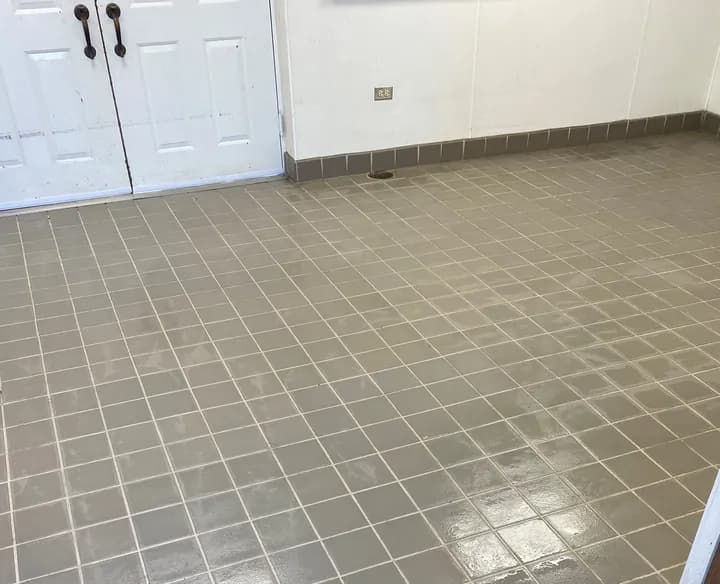
Grout usually turns black because it's porous. It soaks up dirt, cooking oil, soap residue, and dirty mop water, and mildew grows in the damp lines of wet rooms, and those materials darken as they build up in the pores. Identifying which kind of dark you're looking at tells you which cleaner to use and whether the real fix is a habit change. Most black grout is a maintenance problem rather than a permanent one.
What's actually darkening the lines
Four things account for most dark grout. The first is tracked-in soil: grit, dust, and fine sand from shoes, which settles into the lines and gets ground in by foot traffic. The second is oil. Cooking grease and body oils act like a magnet for dust, so the lines pick up a dark film even when they look clean from a distance. The third is soap scum, which builds up in showers and combines with dirt. The fourth is mildew, which shows up as black or dark gray speckles in damp areas.
Cement grout makes all of this worse than tile does, because the tile is glazed or dense and the grout is not. Water and soil sink into the grout and stay there.
Not every dark mark is inside the grout. Black scuffs from rubber-soled shoes sit on the tile surface, and they usually lift with a damp cloth and a little dish soap. If a dark line stays after you wipe it, it's in the joint, and the causes above apply.
Dirty mop water is a bigger culprit than you'd think
Most people blame the grout, but the mop bucket is often the real source. Mopping with gray water or a string mop that's never rinsed leaves a thin layer of soil across the floor. On the tile, it dries and disappears. In the grout, the water sinks in and leaves its dirt behind. A few weeks of this and the lines are noticeably darker than the tiles, even though the floor looks clean.
The fix is simple but changes the result. Use two buckets, one for the cleaning solution and one for rinsing the mop, and change the rinse water often. The full method is in How to Mop Tile Floors Without Dirtying the Grout.
Mildew in wet areas
Mildew needs three things: moisture, a food source such as soap residue or organic soil, and time. Shower floors, the corners where walls meet the tub, the base of the toilet, and the area under a sink tick all three boxes. Warm, poorly ventilated rooms make it faster. Mildew is the usual reason a bathroom grout line turns black in patches instead of evenly. For more on why it returns and how to handle it safely, read Mold and Mildew in Shower Grout.
Identify the dark stain
Use this table to match what you see with the most likely cause before you reach for a cleaner.
| What you see | Most likely cause | First thing to try |
|---|---|---|
| Even gray or brown film across the lines | Soil, soap scum, and oily residue | Mild dish soap solution, scrub, and rinse |
| Dark speckles or fuzzy spots in damp areas | Mildew | 3% hydrogen peroxide, dwell 10 to 15 minutes, test first |
| Orange or rust-colored streaks | Iron in water, or rust from metal | Call a pro before using a rust remover, since many are acidic |
| White, chalky haze | Hard-water minerals or salts coming out of the cement | Mild cleaner first; if it stays, have a pro look at it |
Test any cleaner in a hidden spot before you use it on visible lines, and wait a few minutes before judging the result. Hydrogen peroxide and bleach can both lighten colored grout.
What makes it worse
- Mixing bleach with ammonia, vinegar, or any other acid. The fumes can be dangerous.
- Scrubbing with steel wool or wire brushes, which can scratch the tile glaze and leave behind metal particles that rust.
- Using vinegar on cement grout over and over. Acids slowly dissolve the calcium compounds in cement, which leaves a rougher surface that holds even more dirt.
- Leaving a damp bath mat on the floor, which keeps moisture in contact with the grout.
- Sealing grout before it's clean, which locks the soil in.
Prevention that works
- Wipe spills within a few minutes, especially anything colored or greasy.
- Mop with clean solution, rinse the mop often, and wring it well. A damp mop is enough; a dripping one floods the lines.
- Run the bathroom exhaust fan during a shower and for about 20 minutes afterward.
- Squeegee shower walls and the floor after each use. Standing water is what feeds mildew.
- Pick up bath mats each week and let them dry fully before putting them back.
- Scrub high-use lines with a stiff nylon brush and a mild cleaner once a month.
- Seal cement grout on schedule, using the water-drop test in Grout Sealing: How Often and Which Sealer?.
When to call a professional
If the grout has been dark for a long time, the buildup may be too deep for household cleaning to lift. Royal Carpet Cleaners can also tell you when a stain is outside cleaning altogether. Our tile visit opens with an inspection, then uses pre-treatment and extraction to pull out residue a sponge can't reach. Rust stains, cracked or missing grout, and mildew that covers large areas or comes back quickly need other specialists, and we don't do mold remediation or repairs.
Once the lines are clean, the habits above do most of the work. If you'd rather hand off the deep cleaning, the tile and grout cleaning page explains the visit, and you can schedule at https://book.royalservicesmd.com.
Frequently asked questions
Is black grout a health problem?
Soil in grout is mostly an appearance and hygiene issue. Mildew is the part to watch, because its spores can irritate the airways of people with asthma or allergies. Clean visible growth promptly, and follow your doctor's advice if anyone at home is sensitive to mold.
Why does grout get dark again so quickly after I clean it?
The usual reason is that the source hasn't changed. Dirty mop water, a damp shower that never dries, or a grease-heavy kitchen will re-soil freshly cleaned lines within days. Fix the habit that feeds the stain first, then clean again.
Will bleach whiten black grout?
It can lighten mildew and some dark soil on cement grout, but it won't reach oil and dirt that sit deep in the pores, and it can lighten colored grout unevenly. Dilute it to about one part bleach to ten parts water, ventilate the room, and never mix it with ammonia or acids.

Written by
The Royal Carpet Cleaners Team
Royal Carpet Cleaners is a family-owned, IICRC-certified company based in Bel Air, Maryland. Our technicians clean carpet, rugs, upholstery, tile, and hardwood across Harford, Baltimore, Howard, and Cecil counties.