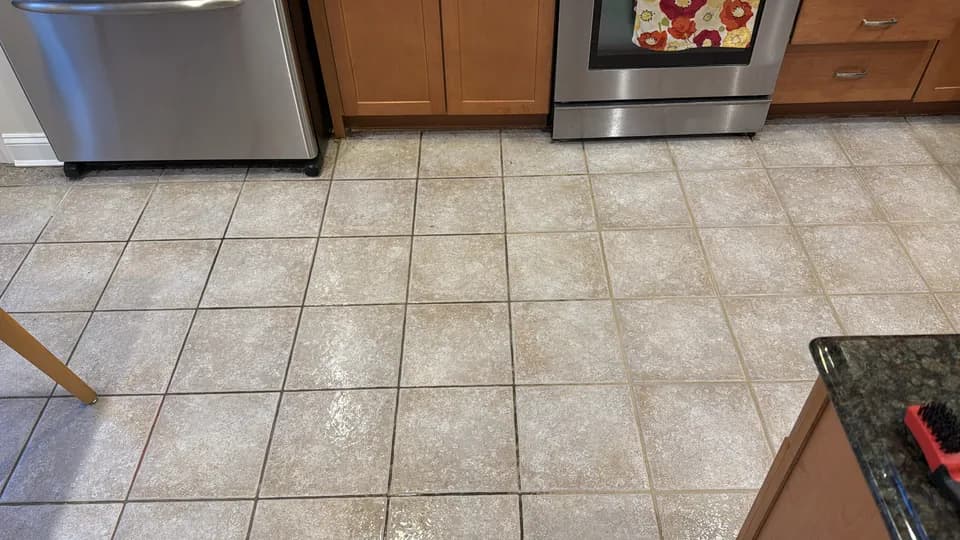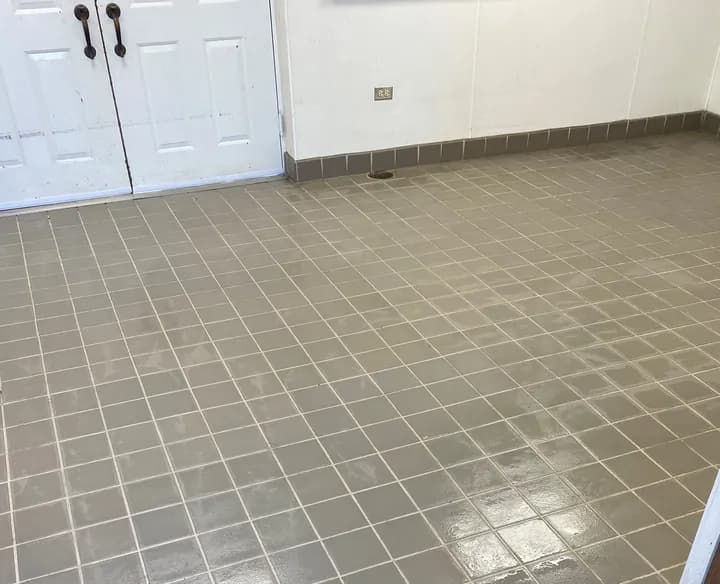
Most cement grout needs a penetrating sealer about every one to two years, and it needs one sooner in kitchens, entryways, and wet areas. The calendar is only a starting point, though, because the water-drop test shows you when the grout has actually lost its protection. For most cement grout, a penetrating sealer is the usual choice, since it protects the pores without building a film on top.
Why grout needs sealing
Cement grout is full of tiny pores and channels, and it draws liquid into them the way a paper towel does. Sealing doesn't make grout waterproof. What it does is line or fill those pores enough that spills sit on the surface long enough to wipe away instead of soaking in. Less absorption means fewer stains, slower mildew growth, and easier cleaning.
Epoxy grout works differently. It's a resin-based material with very low porosity, so it generally doesn't need sealing. Epoxy vs. Cement Grout: Care Differences covers the trade-offs in more detail.
Penetrating vs. membrane sealers
Two families of sealers show up on store shelves, and the difference comes down to where they end up.
| Penetrating sealer | Membrane (film-forming) sealer | |
|---|---|---|
| How it works | Soaks into the pores and stays there | Forms a thin layer on top of the grout |
| Appearance | Leaves the surface looking natural | Can add gloss, and can haze if overapplied |
| Best use | Most cement grout in floors and showers | Specialty products, including some color sealers |
| Main drawback | Adds no color, and needs reapplying on schedule | Can peel or wear unevenly, and is harder to remove later |
Read the label before you buy. It should name the surface it's rated for, such as cement grout, natural stone, or both. If the lines look dark rather than worn, the problem may be soil instead of missing protection, so read Why Does Grout Turn Black? first.
The water-drop test
Run this before you decide anything, and test several spots, since kitchens and entryways wear faster than a guest bathroom.
- Clean the grout and let it dry completely. Humid rooms take longer.
- Place a few drops of plain water on several grout lines, including one in a high-traffic spot.
- Wait about 10 minutes.
- If the water beads up or stays on the surface, the sealer is still working.
- If the drop soaks in and leaves a darker spot, that grout has lost its protection and needs resealing.
If more than one spot fails, reseal the whole area so the finish looks even.
How often to reseal
For cement grout, one to two years is the common guideline, and the water test should override it. Kitchens near the stove, entryways that track in sand and grit, and shower floors where water pools all benefit from earlier resealing. A lightly used guest bathroom may go longer. If you're not sure whether your grout is cement or epoxy, check the paperwork from the installation or ask your installer, since the answer changes the maintenance plan entirely.
Test each zone on its own. A kitchen, an entryway, and a powder room on the same floor can wear at very different rates, so run the water test in every area and track the results. When one zone fails, reseal that whole zone at once instead of spot-treating the failed patches. A partial application leaves uneven sheen, and the freshly sealed patches will look darker than the rest for a while. Write down the date you resealed each zone. That gives you a reference point, so next year's water test tells you whether the interval needs to shrink or can stretch a little.
Clean first, then seal
Sealer locks in whatever is already in the pores. If you seal over soap film or grease, you've sealed the dirt in, and it will look permanently dark. Clean the grout with a mild cleaner, rinse with clean water, and let it dry fully. Give it as long as the label says, and add time in humid weather, since a closed bathroom or a damp basement can stretch drying noticeably.
When you apply the sealer:
- Work it into the grout lines with a small foam brush or a narrow applicator bottle.
- Keep it off the tile face. Wipe any stray sealer with a dry microfiber cloth right away, because dried sealer can leave a haze on glazed tile.
- Apply one thin coat, or two if the label calls for it. Heavy coats don't seal better. They pool, stay sticky, and collect dirt.
- If the product is solvent-based, open windows and run a fan, and follow the label's ventilation instructions.
- Keep foot traffic off the floor until the label's cure time has passed.
Common sealing mistakes
- Sealing grout that still holds soap film or cooking grease.
- Flooding the lines so the sealer pools and hazes the tile around them.
- Treating sealer as stain-proofing. It slows staining, but it doesn't stop it.
- Sealing epoxy grout when the manufacturer doesn't call for it.
- Resealing on a fixed schedule without running the water test, which wastes product in areas that don't need it.
When to call a professional
Sealer can't fix grout that's crumbling, loose, or missing. Those are repairs for a tile setter. If your grout is clean but worn, a professional cleaning followed by sealing is often the simplest reset. Royal Carpet Cleaners includes an optional grout sealer in its tile service, applied after the cleaning and inspection, so the grout is clean and dry at the moment you seal it. If you'd like the seal applied in the same visit, the tile and grout cleaning page shows how it fits, and online booking is at https://book.royalservicesmd.com.
Frequently asked questions
Can sealer make grout waterproof?
Not completely. Sealer slows water and stain absorption, which gives you time to wipe up spills, but it doesn't make grout impervious to liquids. Sealed grout still needs prompt cleanup.
Do I need to seal the tile too?
Usually not for glazed ceramic or porcelain, because the glaze is already nonporous and the grout is the weak point. Unglazed tile and natural stone can absorb liquids, and whether they need a sealer depends on the material and the product.
Can I seal grout that's already stained?
Clean it first, because sealing over a stain traps it. If discoloration remains after a thorough cleaning, grout color sealing is the product type designed for that, and you should still test it on a hidden line first.

Written by
The Royal Carpet Cleaners Team
Royal Carpet Cleaners is a family-owned, IICRC-certified company based in Bel Air, Maryland. Our technicians clean carpet, rugs, upholstery, tile, and hardwood across Harford, Baltimore, Howard, and Cecil counties.