
Tile & Grout4 min read
Grout Sealing: How Often and Which Sealer?
Cement grout usually needs resealing every one to two years, but a water-drop test tells you more than the calendar. Here's how to choose a sealer.
Read guide
Grout is porous, natural stone is acid-sensitive, and the wrong cleaner can damage both. Here is how to keep tile floors, showers, and backsplashes clean, and when sealing or color sealing makes sense.
Tile & Grout4 min read
Cement grout usually needs resealing every one to two years, but a water-drop test tells you more than the calendar. Here's how to choose a sealer.

Tile & Grout4 min read
Black grout is usually soil trapped in porous cement, or mildew in damp spaces. Learn what's darkening your lines, how to tell which it is, and how to stop it.
Tile & Grout4 min read
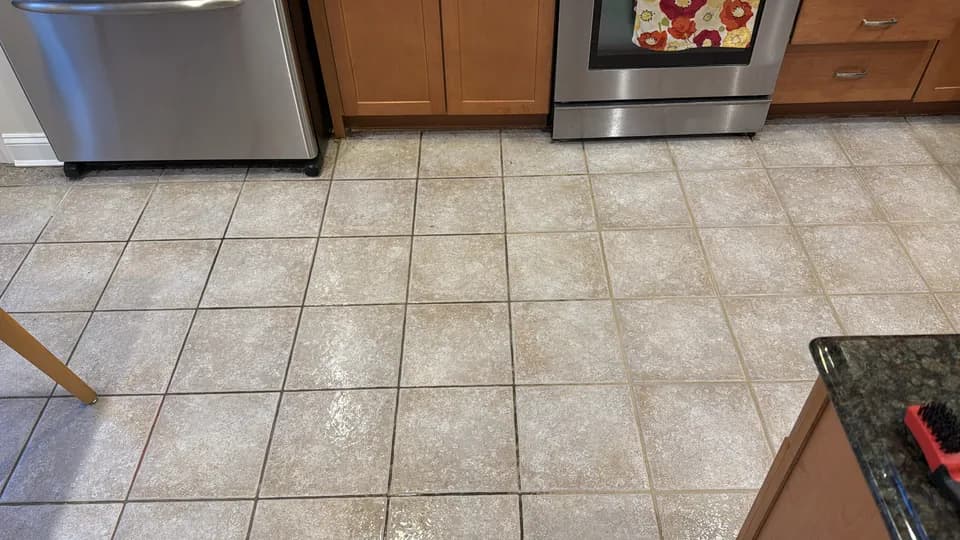
Dirty grout traps soil, grease, and moisture that feed mildew and dull your tile. Here's how to spot the warning signs and clean grout without damaging it.
Tile itself is easy to clean. Grout is the problem: it is porous, so it absorbs dirty mop water, soap residue, and mildew until the lines turn dark. Natural stone such as marble and travertine adds another rule, because acidic cleaners like vinegar etch the surface.
A pH-neutral cleaner, frequent changes of mop water, and resealing grout on schedule prevent most problems. When grout has darkened past what scrubbing can fix, professional cleaning followed by sealing or color sealing restores an even look.
See our professional tile & grout cleaningExperience the Royal difference. Get started in under a minute, or call us directly for personalized service.