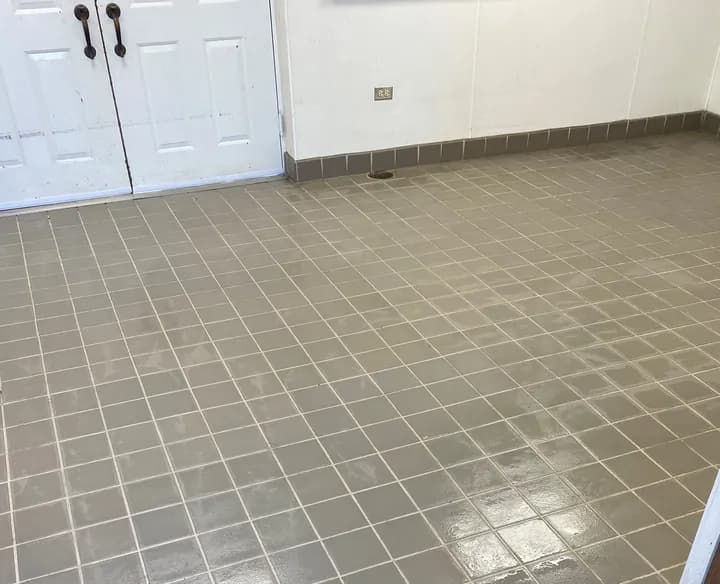
Dirty grout is more than a cosmetic problem. Cement-based grout is porous, so it soaks up spills, cooking grease, soap residue, and moisture, and those trapped materials give dirt and mildew a place to settle in. Regular cleaning removes that buildup before it turns into a stain or a growth problem, and it keeps your tile looking like tile instead of the dark lines around it.
Why grout holds on to dirt
Tile is smooth and hard, so a mop glides across it without much trouble. Grout is different. It's a porous cement mix full of tiny channels, and when liquid sits on the surface, it wicks down into those channels. Once the water evaporates, it leaves behind whatever it was carrying: soap scum, cooking oil, hard-water minerals, and grit tracked in from outside.
Over weeks, that residue builds into a gray or brown film that quick mopping won't remove. The film also grabs new soil, so the lines get darker faster than the tile around them.
What's really in the lines
In a bathroom, most of the buildup is soap and body oil mixed with mineral deposits from hard water. In a kitchen, it's a sticky film of cooking grease that catches dust. In an entryway, it's sand and road grime. Each type responds to a different cleaner, which is why one product rarely fixes everything.
Warning signs your grout needs attention
- A gray or brown film that returns within a few days of mopping.
- Dark speckles or fuzzy patches in damp spots, such as the shower floor or behind the tub. These are usually mildew.
- A musty smell near tile in a bathroom, laundry room, or basement.
- Grout that looks dull, feels rough, or shows footprints quickly.
- Hairline cracks or missing grout, which let water reach the material beneath the tile.
Cracks and missing grout are a repair issue rather than a cleaning issue. Cleaning can't close a gap, so address those spots first if you can.
Mildew is the part that deserves attention
Ordinary soil in grout is mostly an appearance and hygiene issue. Mildew is different because it grows in damp, poorly ventilated spaces and releases spores that can become airborne when you disturb it. For most households, the first sign is a musty smell and dark spotting. For people with asthma or allergies, mold spores can irritate the airways, so it's worth clearing growth promptly rather than letting it spread. Cleaning removes the soil and moisture that mildew depends on, but it won't cure allergies. If anyone at home has asthma or allergies, follow their doctor's advice.
How to clean dirty grout, step by step
- Sweep or vacuum loose grit first. Grit acts like sandpaper once you start scrubbing, and it can scratch glazed tile.
- Mix a mild cleaner. For most grout, about ¼ teaspoon of clear dish soap in a cup of lukewarm water does the job. A pH-neutral tile cleaner also works, as long as you follow the label.
- Test in a hidden spot. Dab the solution where nobody will see it, wait a few minutes, and check for color change or a dull film.
- Scrub the lines with a stiff nylon brush. Work along the grout line rather than across it, and avoid wire brushes, which can scratch the glaze.
- Let the cleaner dwell for five to ten minutes so it can loosen soil. Keep the surface damp, and don't let the cleaner dry on the tile.
- Rinse with clean water and dry the area. Change rinse water often, because dirty water puts soil right back into the grout.
For dark mildew spots, swap the dish soap solution for 3% hydrogen peroxide. Apply it, let it sit for 10 to 15 minutes, scrub, and rinse. Hydrogen peroxide can lighten colored grout, so test it first. Never mix it with vinegar, because the combination forms peracetic acid, which is corrosive and irritating.
What not to do
- Don't mix bleach with ammonia, vinegar, or any other acid. Mixed chemicals can release toxic gases.
- Don't scrub grout with steel wool or wire brushes.
- Don't use vinegar on cement grout as a routine cleaner. Acids slowly dissolve the calcium compounds that hold cement together, leaving grout rougher and more porous.
- Don't wait on spills. Fresh residue is far easier to lift than a film that has baked on for months.
- Don't leave any cleaner to dry on the surface.
Sealing clean grout
Clean, fully dry grout takes sealer far better than dirty grout does. A penetrating sealer soaks into the pores and slows future absorption, which makes the next cleaning easier. A color sealer also adds tint, which can hide discoloration that cleaning can't fully remove. Sealing doesn't repair cracked grout or lift stains that have already soaked in, so clean and inspect first. For sealer types and timing, read Grout Sealing: How Often and Which Sealer?.
If the discoloration is the real problem, grout color sealing may be the better fix. We offer it alongside our tile cleaning.
In bathrooms, ventilation does more than a dehumidifier. Run the exhaust fan during showers and for about 20 minutes afterward, and squeegee the walls and floor to remove water that would otherwise feed mildew. Mold and mildew in shower grout covers the details.
When to call a professional
A professional tile cleaning starts with a surface inspection, then moves through a pre-sweep, pre-treatment, high-pressure truck-mounted extraction, and a neutralizing rinse. A grout sealer can be added once the grout is clean. If grout is cracked or missing, a tile setter should repair it before any cleaning, and if mildew keeps returning or water is coming from behind the tile, call a mold or water damage specialist. Royal Carpet Cleaners does not do mold remediation or water damage restoration, so we'll tell you when a problem belongs with someone else.
A deep cleaning is a sensible reset for grout that has gone a long time without attention, and the wipe-ups described above are what keep the result. The tile and grout cleaning page explains what a visit covers, and online booking is at https://book.royalservicesmd.com.
Frequently asked questions
Can I use bleach on dirty grout?
Diluted household bleach, roughly one part bleach to ten parts water, can lighten mildew on cement grout when it sits for five to ten minutes and the room is ventilated. It won't reach oil and soil deep in the pores, and it can lighten colored grout, so test a hidden spot first.
How often should grout get a deep cleaning?
Wipe spills the same day and mop kitchens and bathrooms weekly. Most homes benefit from a deep cleaning once or twice a year, and busy kitchens, entryways, and shower floors may need it more often.
Does a dehumidifier help with mildew in bathroom grout?
A dehumidifier helps in a damp basement or a closed laundry room, but an exhaust fan works better in a bathroom because it pulls steam out at the source. Running the fan during showers and for about 20 minutes afterward is the simplest habit that slows mildew.

Written by
The Royal Carpet Cleaners Team
Royal Carpet Cleaners is a family-owned, IICRC-certified company based in Bel Air, Maryland. Our technicians clean carpet, rugs, upholstery, tile, and hardwood across Harford, Baltimore, Howard, and Cecil counties.